




Regional resilience through local expertise
An earlier version of this article appeared in the Australian Financial Review in April 2026; it has since been amended by BHP.
BHP’s Future of Work Program boosts national productivity by upskilling homegrown talent.
Talk to employers across regional Australia and a common theme emerges: the hardest thing to secure isn’t funding – it’s people. The challenge is compounded by another reality: many who live in regional communities want to remain there, but their access to training and career pathways is under pressure.
In towns where industry dominates the local economy, workforce needs extend beyond just a single sector. Health services, education providers and small businesses all rely on a steady pipeline of skills, yet opportunities to train or upskill locally remain limited.
For residents, the ability to build a career without leaving their community can shape whether human capital is retained or lost. This means access to training that aligns with local demand is increasingly seen as critical to sustaining regional economies.
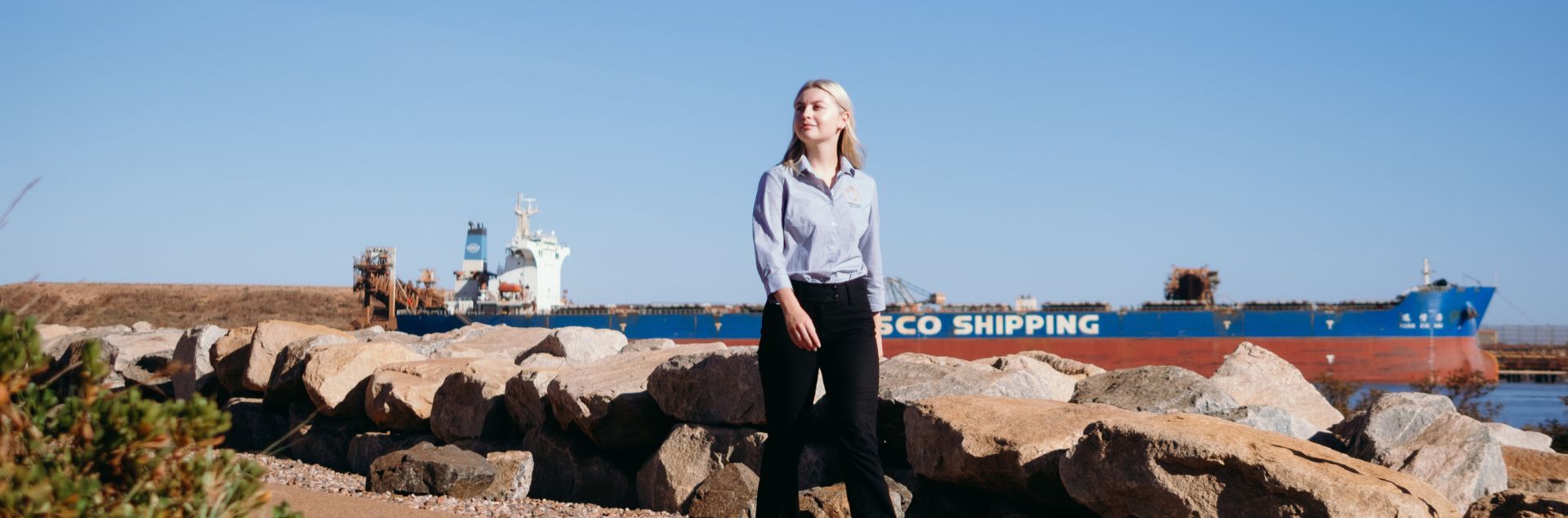
Rachael Heywood, who lives in Port Hedland in Western Australia, says the appeal of regional life is why she wants to continue building her career locally. Heywood, currently studying for a Certificate IV in Optical Dispensing, is supported through BHP’s Future of Work Program, which helped remove financial barriers and enabled her to pursue a formal qualification while remaining in her hometown.
“The more knowledge I have, the more I can progress in this industry,” says Heywood. “Not everyone that comes here wants to work in mining. I just want to help the community more; I’m very proud that I can help people see.”
Programs designed to expand those local pathways are increasingly recognised as long-term economic investments via corporate social responsibility initiatives. The economic case for locally anchored workforce development is becoming clearer as industries confront structural labour shortages and an ageing population.
In many regions, participation in education and training has historically lagged behind metropolitan areas, while access to courses, transport and financial support can present additional barriers.
Geraldine Slattery, BHP’s President Australia, says strengthening regional capability is central to the country’s long-term economic resilience and productivity.
“Not only is regional Australia the backbone of our industry and home to the people who keep it moving forward, it’s also the engine room of Australia’s economy,” she says.
“At BHP, we believe in backing the people and communities who back Australia – whether that’s returning to study, changing careers or gaining new skills for the jobs of tomorrow.
“One such example is our Future of Work Program, which provided funding support for more than 1400 regional Australians to pursue study and skills-building with a focus on fields like health, education and engineering.
“From Muswellbrook to Mackay, Roxby Downs to Port Hedland, it’s about investing in careers and communities where it matters most.”
Tailoring initiatives to the different needs of regional communities has been central to the program’s design, reflecting varied workforce demands across industries, locations and demographics. BHP also supports Indigenous-led partnerships focused on regional growth and employment, including work with the Indigenous Desert Alliance (IDA).
“Indigenous land management is a major employer for Aboriginal people in desert communities, with hundreds of rangers and staff working on Country,” says IDA chief executive Samantha Murray.
“As our sector grows to meet national economic and biodiversity goals, we’re working to make ranger programs strong and sustainable through culturally appropriate training, solid leadership pathways and better operational support.”
Programs focused on local skills development are also helping more people enter or re-enter the workforce, including younger residents and those seeking to change careers later in life.
This impact is best seen through Samantha Leonard, a teacher aide in Mackay, Queensland, who is using BHP’s Future of Work Program to pivot into a professional teaching role.
“Mackay has just always been my home,” Leonard says.
“My acceptance into the Regional Education and Skills Program [under the Future of Work Program] means I’m able to further my career from being a teacher aide to a qualified teacher. I’m able to do that without the financial burden that sometimes people take on when they go through uni.”
By aligning training with local demand, these models create clearer pathways into employment while supporting businesses that rely on specialised or community-based roles. The impact extends beyond individual job outcomes; stronger local workforce capacity improves access to essential services and reduces reliance on external recruitment.
For regional Australia, the task now is less about attracting workers from elsewhere and more about equipping those already there with the skills to participate, contribute and lead. Workforce development, in that sense, is becoming not just a local priority but a national economic imperative.
Related Content


