




Why electrification is gaining momentum across Australia's mining sector

Summary
|
|
Electrification is key to BHP’s decarbonisation strategy. We remain on track to meet our operational greenhouse gas (GHG) emissions medium-term target of at least a 30 per cent reduction by FY2030 against an FY2020 baseline. |
|
|
As reported last year, progress on electrifying heavy haul trucks and locomotives is taking longer than previously anticipated, reflecting the pace of technology development and original equipment manufacturer (OEM) delivery. |
|
|
In Australia, BHP is trialling two 240-tonne battery-electric haul trucks at Jimblebar and has received two battery-electric locomotives in Port Hedland for upcoming trials. The trials will help test how large-scale battery-electric technology performs in demanding mining and rail environments. |
|
|
Combined, the batteries on these machines are expected to hold more than 29 megawatt hours of energy, enough electricity to power an average Australian home for more than five years. They are early steps in what could become a major shift in the technology used to power large-scale mining. |


BHP is making progress on one of the biggest challenges facing the mining sector: how to move from diesel-powered equipment to electric technology that can operate safely, reliably and at scale.
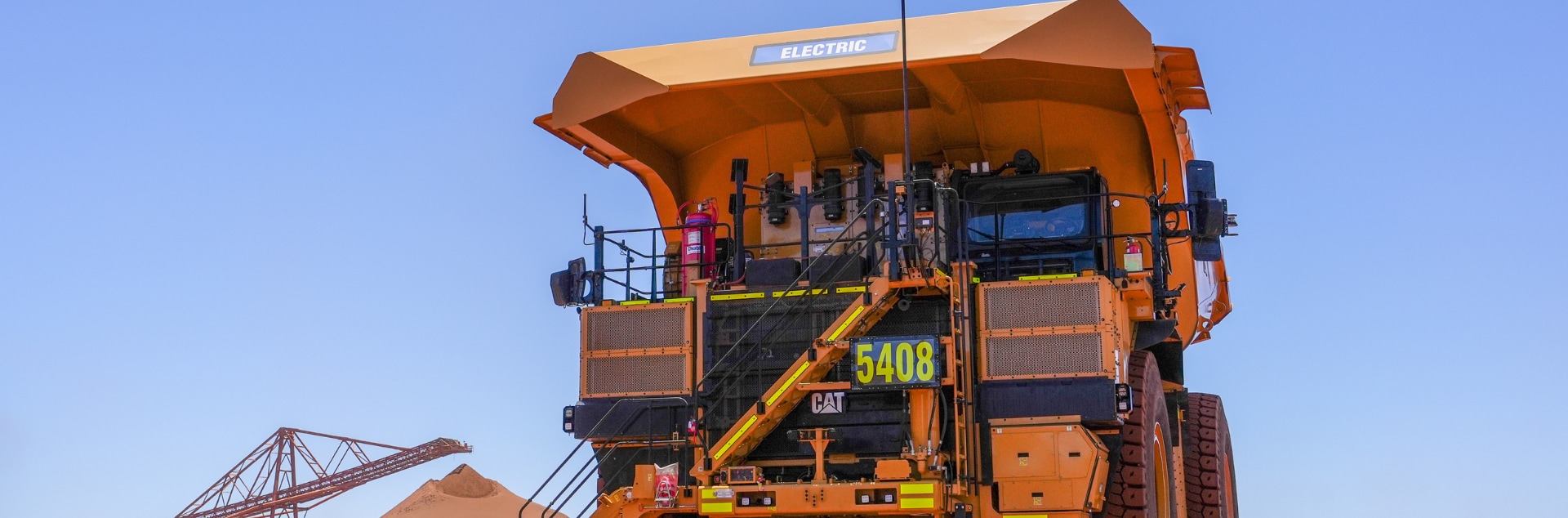
Two 240-tonne battery-electric haul trucks are being trialled at our Jimblebar operation in the Pilbara. In Port Hedland, Australia’s first purpose-built battery-electric locomotives have arrived for upcoming trials. Combined, the batteries on these machines are expected to hold more than 29 megawatt hours of energy, enough electricity to power an average Australian home for more than five years. They are early steps in what could become a major shift in the technology used to power large-scale mining.
Electrification is key to BHP’s decarbonisation strategy. We remain on track to meet our operational greenhouse gas (GHG) emissions (Scopes 1 and 2 emissions from our operated assets) medium-term target of at least a 30 per cent reduction by FY2030 against an FY2020 baseline. As reported last year, progress on electrifying heavy haul trucks and locomotives is taking longer than previously anticipated, reflecting the pace of technology development and original equipment manufacturer (OEM) delivery.
In this article, we explore BHP’s preferred technology pathway and how BHP is taking steps to test and trial new solutions while continuing to make progress towards GHG emissions reductions across our Australian and global operations.
Operational emissions and industrial electrification
In FY2025, BHP’s operational emissions were down by 36 per cent compared to our adjusted FY2020 baseline and we have shifted most of our electricity use to renewables. We have used 100 per cent renewable electricity in Chile since CY2022, where downstream processing at our operations results in a high proportion of electricity in the energy use mix, and now over 70 per cent globally.
In Australia, the BHP Mitsubishi Alliance (BMA), operating in Central Queensland, will move to 100 per cent renewable electricity from July 2026 (based on current forecast demand). Western Australian Iron Ore has secured renewable supply for part of Port Hedland’s electricity needs and is exploring large-scale Pilbara solutions. Across the business, we are expanding partnerships and agreements to keep increasing renewable supply at our grid-connected operated assets.
This represents rapid progress, particularly over the past five years, making us one of the leading companies in GHG emissions reduction among the Top 20 Australian Stock Exchange companies. Having significantly reduced emissions from electricity use, diesel is now our largest source of operational emissions.
How to deploy electrification
It is tempting to think that electrifying mining involves a simple swap, like replacing diesel engines with battery-electric equipment. In reality, scaling from the more commonly used kilowatt-level batteries found in cars to the megawatt-scale systems required for mining trucks and locomotives represent a significant leap.
The scale changes everything: electrification requires transforming the entire ecosystem and installing new infrastructure, while also managing the significant safety risks introduced by very large, high voltage DC battery systems. When you go from a prototype vehicle to a fleet, the most important questions are no longer limited to the truck or the locomotive. They become system-wide considerations:
- “Do we understand the new safety risks this technology would introduce on our sites and can we manage them to make it safe for our teams to operate and maintain?”
- “How do we charge equipment at the pace operations require, without compromising the reliable supply of commodities our global customers depend on?”
- “Who else across our industry and beyond faces the same challenges and can we partner with them to support innovative solutions?”
And it is because these challenges vary by site that a global portfolio becomes advantageous once suitable technology becomes ready for testing.
Global operations, one challenge, different solutions
Conceptually, battery electric mining trucks are advancing rapidly, but capability and readiness vary significantly by truck size, duty cycle, and mine design. To date, most meaningful scale deployments globally are concentrated in sub 120 tonne payload trucks, operating in shorter, lower energy haul cycles such as coal and quarry applications, predominantly in China.
BHP has entered a Global Framework Agreement with XCMG to broaden our exposure to battery electric haulage technologies and alternative decarbonisation pathways. XCMG has deployed hundreds of battery electric trucks primarily in the ~80–100 tonne class across Chinese mining operations. Through this partnership we hope to develop valuable insight into battery performance, charging approaches and manufacturing models that may inform alternative solutions as the technology options for larger truck classes mature.
Australia is where some of our more complex electrification questions converge, but also where we are making good progress testing the latest technology, to learn and inform next steps.
In the 240-tonne class and above, the challenge is more complex, with battery architectures and high-power charging solutions still under active development by multiple suppliers.
Australia’s first Cat® 793 XE Early Learner battery-electric haul trucks arrived at BHP’s Jimblebar iron ore mine in the Pilbara late last year, enabling on-site testing in collaboration with Rio Tinto and Caterpillar. Having been safely commissioned, the trials are testing the viability of battery-electric technology as an alternative to diesel in large-scale iron ore operations.
In Port Hedland, two Wabtec battery-electric locomotives have arrived for upcoming trials, with two Progress Rail battery-electric locomotives expected to join them later this month.
Together, these trials will help BHP understand how high-energy battery systems behave in mining and rail environments, and what will be needed to safely manage the power demands of large electric fleets. As part of this work, BHP also plans to trial dynamic charging technology, or charging on the move, which could help address some of the limitations of current battery chemistries and improve the viability of large battery-electric truck fleets.
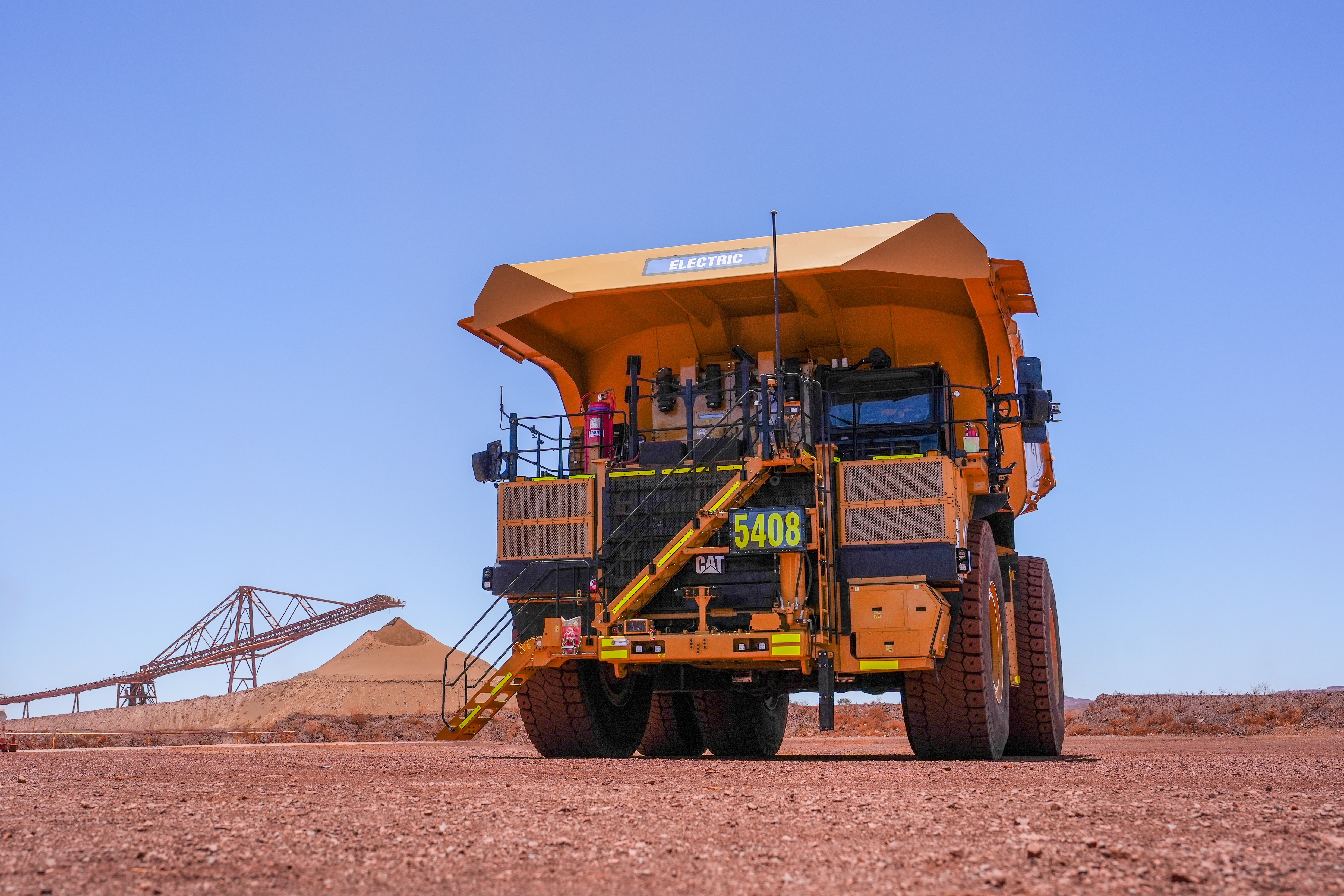
BHP is progressing Caterpillar battery-electric haul truck trials at our Jimblebar operation in the Pilbara.
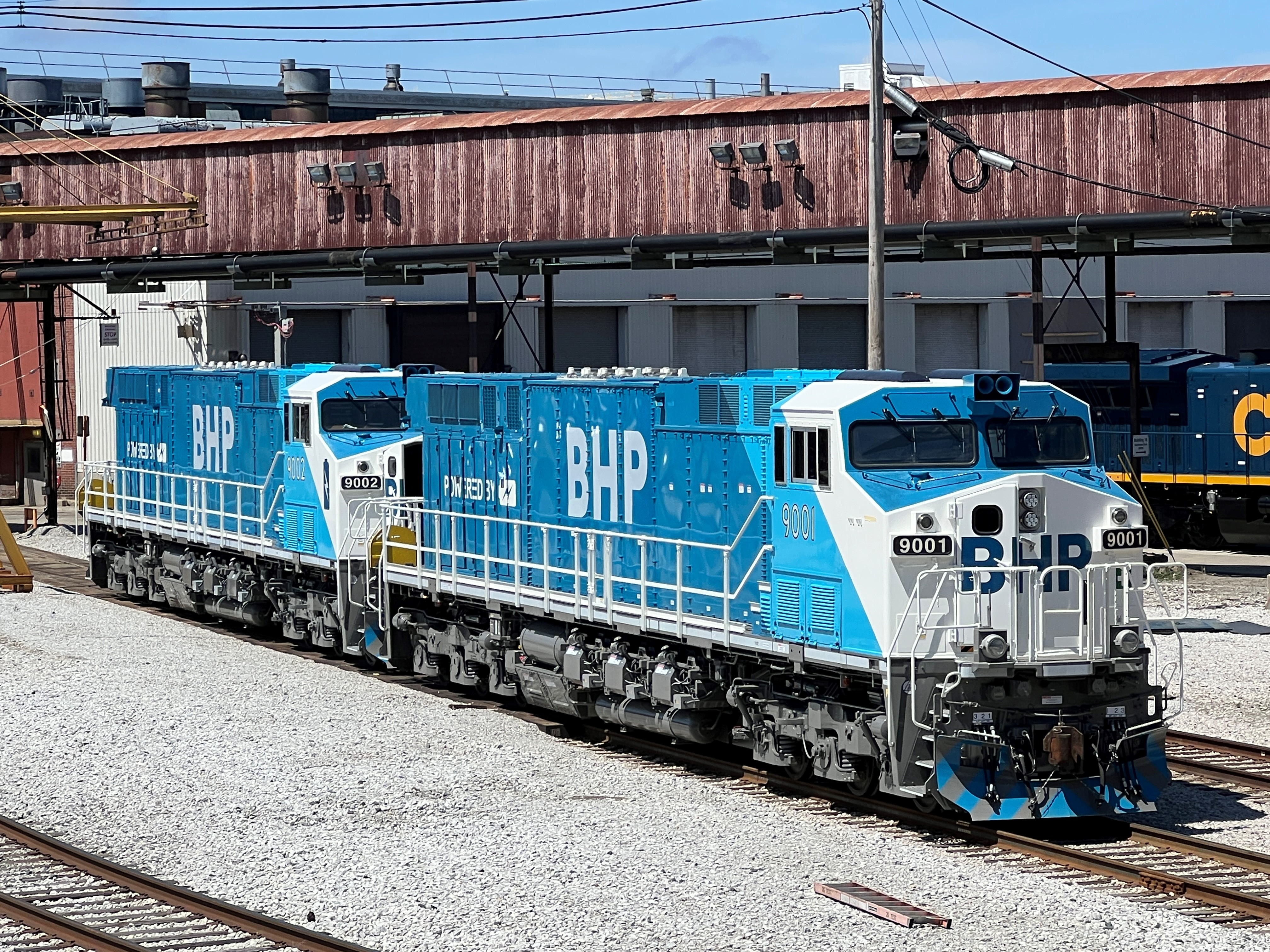
BHP has taken delivery of two purpose-built Wabtec battery-electric locomotives to operate in trials on our Pilbara rail network.
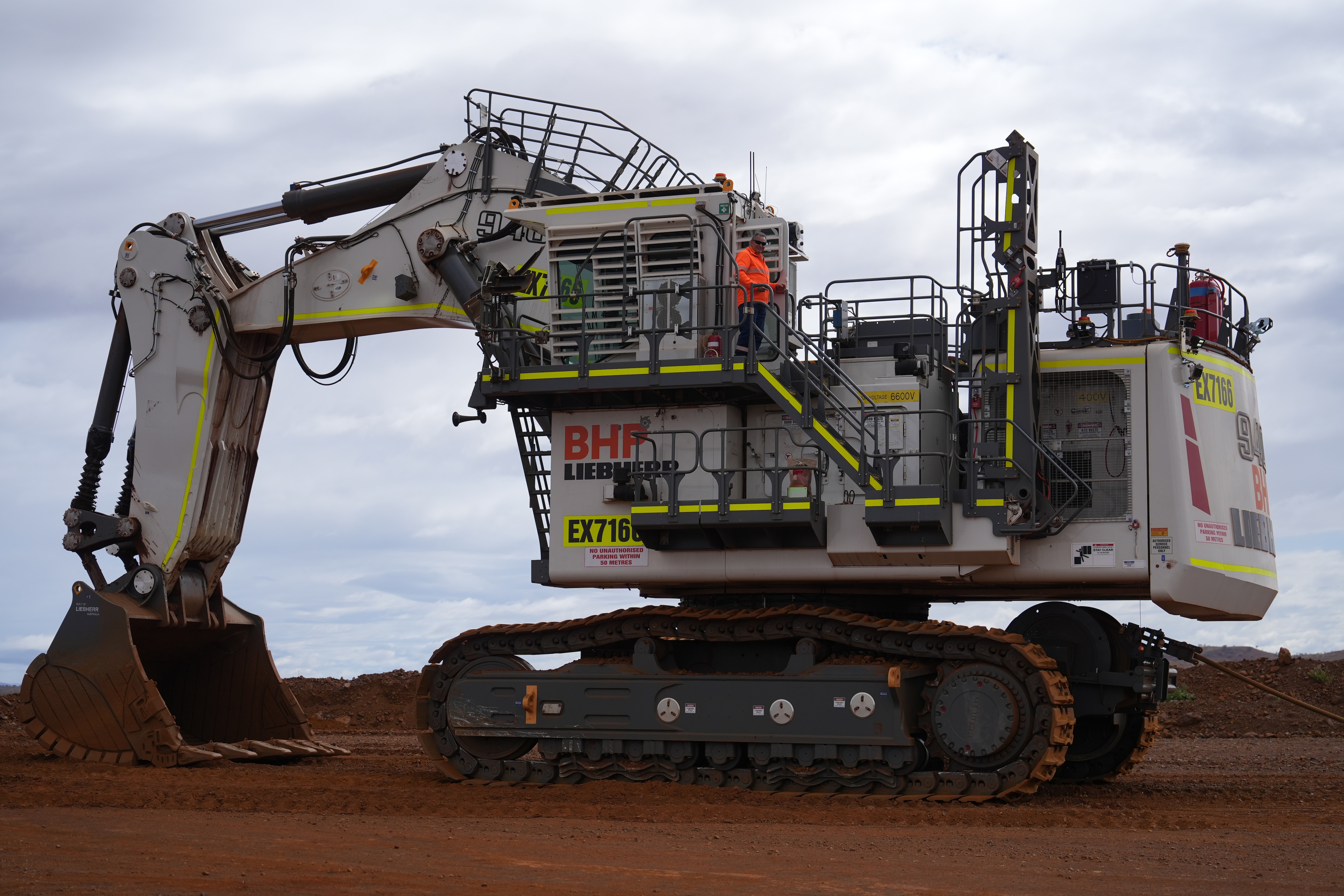
BHP has also trialled the Liebherr 9400E electric excavator at Yandi, with plans for a subsequent stage in Newman operations.
The path forward
Our industry will electrify mining at scale through steady, disciplined work that turns trials into pilots and pilots into production.
For BHP, trials will help us understand how we plan, operate and maintain our mines, the skills we need, how we manage additional power demand, and how we manage the safety considerations these changes introduce.
The transition will be complex and hard-won, but through a disciplined and scalable approach, we are working to turn ambition into outcomes across our operations.
The world needs the materials we produce and rightly expects industry to keep improving how we produce them.


