





In producing some of the critical resources the world needs, we can also help make a significant contribution to the communities where we operate.
We’re committed to not only reducing greenhouse gas emissions from our operations (Scopes 1 and 2 emissions) but also supporting our customers and partners to develop the technologies and pathways needed to help them reduce their emissions.
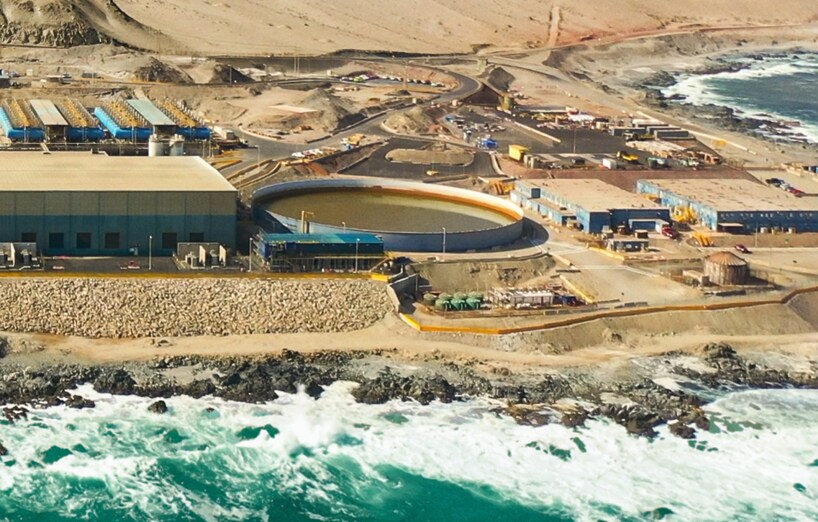
BHP-operated Escondida mine uses desalinated seawater in its mining operations.
We are committed to responsible production of resources and more sustainable water management. And we’ll continue to work to improve our practices and raise the bar on water management.
Over the past 15 years, BHP has invested around US$4 billion in desalination capacity at our operations in Chile. In 2005, we commissioned our first desalination plant, building a second plant and subsequently expanding its capacity. Combined, this allows us to produce around 3,800 litres per second at our desalination plants located in Puerto Coloso, Antofagasta. Today, Escondida operates exclusively on desalinated seawater, as does Spence's copper concentrator plant.
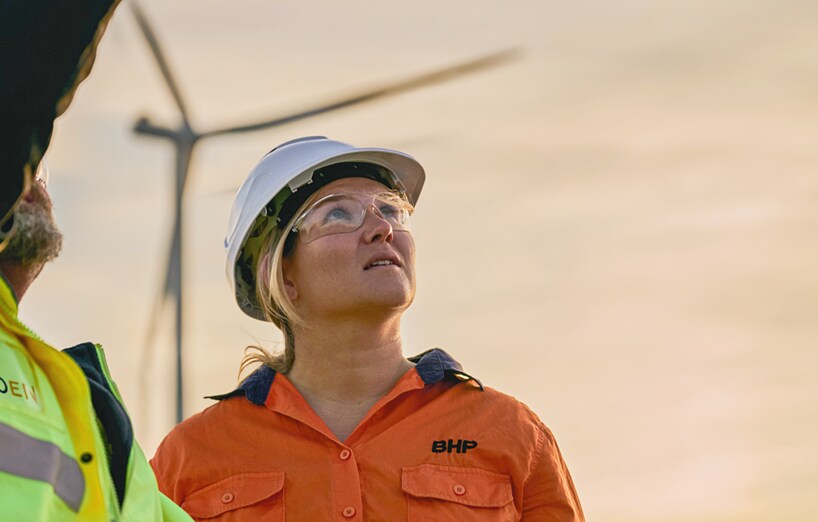
Working to reduce greenhouse gas emissions from our operations.
We are taking steps towards operational decarbonisation, seeking to help accelerate options for electric mining and vehicles to displace the use of diesel in our operations and increase the use of renewable energy in our electricity mix.
We have signed a power purchase agreement with Neoen to partly power our copper mine at Olympic Dam in South Australia with wind and battery power. This is one of the actions we are taking to reduce Scopes 1 and 2 greenhouse gas emissions from our operations.
A resources mix for today and for the future
We’re focused on producing essential resources like iron ore and steelmaking coal used in the production of steel needed to help build growing cities. Potash to help grow more of the food we need. Copper needed for the energy transition.

Iron ores are rocks and minerals from which metallic iron can be extracted. Iron ore is integral to the ore-based steelmaking process and one of the most sought-after commodities in the world.
The future of iron ore


Potash is a potassium-rich salt used mainly as fertiliser to improve the quality and yield of agricultural production. Potassium naturally occurs in soil, but farming depletes this mineral faster than naturally occurring sources can replenish it. Regular use of potash fertiliser helps maintain the productivity of fields that have lost nutrients from years of repeated nutrient removal through harvest.
The future of potash

Copper is a pinkish-orange metal that is used in a broad range of everyday household products from wiring, pipes, appliances and smartphones, as well as in electricity generation, and electric vehicles. It’s an excellent conductor of electricity and is corrosion resistant and antimicrobial, meaning it can prevent the growth of bacteria.
The future of copper