




Healthy Rivers to Reef Partnership
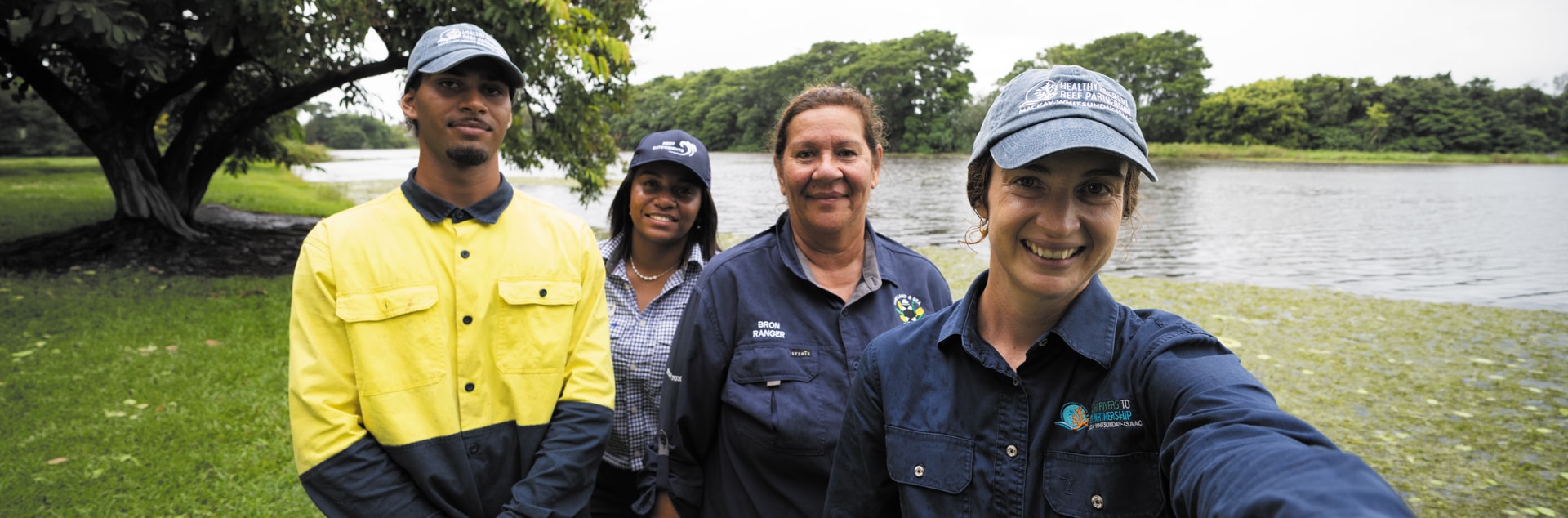
If you want to understand a place properly, don’t just look at it. Test its water, walk its banks, listen to the people who’ve cared for it for generations, and maybe, just maybe, you’ll start to get the full picture.
That’s exactly what the Healthy Rivers to Reef Partnership is trying to do.
Across the Mackay–Whitsunday–Isaac region, a quiet collaboration is underway, one that stretches from freshwater creeks to coral reefs, and brings together scientists, Traditional Owners, local communities and landholders, all working toward the same goal: understanding, and ultimately protecting, the waterways that connect them all.
At the centre of it is a simple idea.
“If we don’t know what is happening in our waterways, we don’t know how to change them,” says executive officer Jaime Newborn.
It’s what the Partnership calls “science for community, and science for management” - gathering data across rivers, estuaries, seagrass and reef systems, then turning it into something people can actually use. Not just numbers on a page, but a clearer picture of how the region is doing, and what needs attention next.
But work doesn’t happen in isolation.
It’s shaped by the people who know this country best.
For Yuwi Traditional Owners, waterways aren’t just environmental features, they’re deeply tied to culture, food, and identity. Yuwi senior land and sea ranger Bronwyn Tonga puts it simply: looking after land and water is about “making sure it’s there for future generations… so we can always have and enjoy this beautiful country of ours.”
That care extends beyond cultural boundaries, too. Rangers work alongside farmers and pastoralists, recognising that healthy waterways support everything from wildlife to grazing land, and that everyone has a role to play in keeping them that way.
Out on the ground (and, of course, in the water), the work is hands-on.
Project officers collect samples up and down the region’s estuaries. Rangers monitor land and sea country. Teams check in on ecosystems big and small, from coral and seagrass to freshwater systems further inland.
For some, it’s the connection to place that makes it worthwhile.
“My favourite part of the role is getting out and being able to have a visual inspection of what is happening with our waterways,” says Reef Catchments project officer Jamay Deshong.
For others, it’s about responsibility.
“It’s our water… we’ve got to live with it,” says Yuwi ranger Andrew Malaytah. “As long as we keep it clean and sustainable, it’ll be better for the future generations.”
And maybe that’s what makes this partnership work. It’s more than just science and sentiment, it’s both, which leads to greater outcomes than the sum of its parts. A shared understanding that what happens upstream affects what happens downstream. That rivers don’t stop at fence lines. That reefs rely on what flows into them.
And that looking after a place like this takes more than one perspective.
It takes all of them.
Whether you’re measuring it, managing it, or simply living alongside it, from rivers to reef, it’s all connected.
Related Content


