




Childcare in the regions
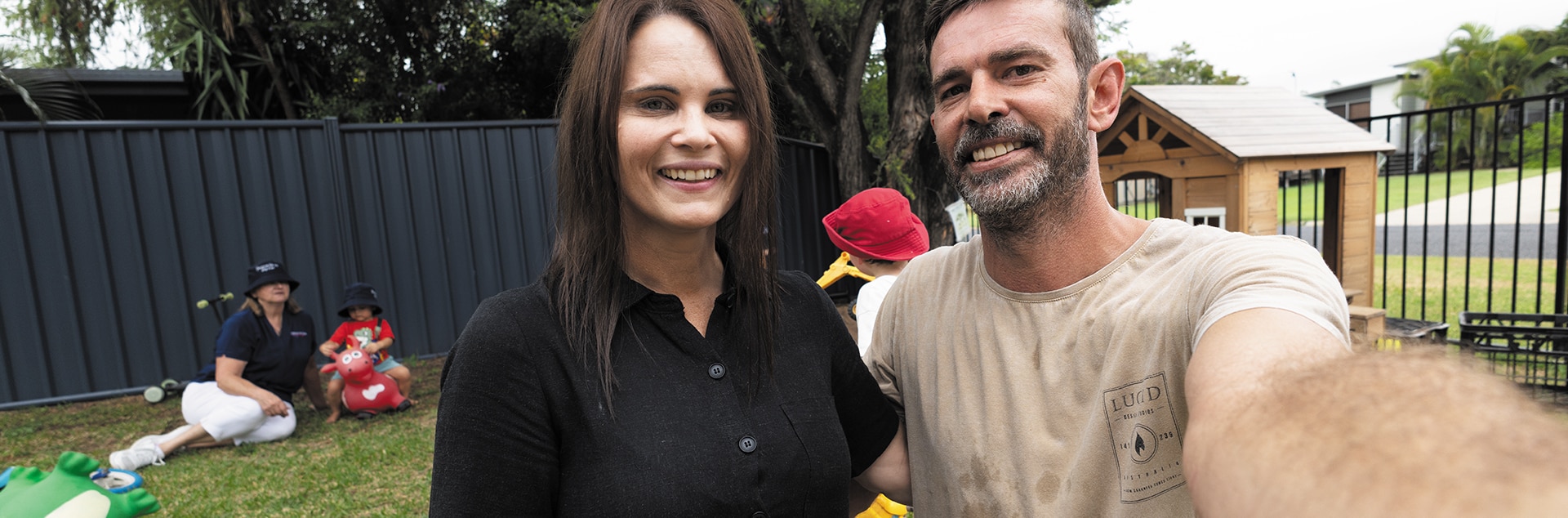
In a small town like Dysart, childcare isn’t just a “nice-to-have”. It’s the difference between staying… and leaving.
For years, families here faced a familiar regional challenge: not enough educators, not enough places, and not enough certainty. If you couldn’t find care, you couldn’t work. And if you couldn’t work, staying in town became a whole lot harder.
But step inside one of Dysart’s family day care homes today, and it tells a very different story.
It might look like a regular house from the outside. Inside, though, it’s something more. It’s a place where children learn, play, and build deep one-to-one bonds with their educator. This provides parents the breathing room they need to keep everything else moving.
“We help educators set up a family day care from the comfort of their own home, providing early childhood education and care to the local community,” explains Damon Somerfield from Family Day Care Australia.
It’s a seemingly simple model, but in regional communities, it’s a powerful one, and in Dysart the impact is tangible.
“There was previously very limited care here, which generally revolved around mainstream childcare centres,” says Kimberly Diefenbach, who works with the Excellence in Care Family Day Care service. “If you have children, you need care in order to work.”
Now, with additional family day care offerings up and running, that equation has changed.
“Having education and flexible care offerings… is so important because without it, families need to leave,” she explains.
Instead, families are staying. Children are building routines and accessing high quality education and care. Communities are stabilising.
And the benefits go beyond logistics.
Family day care creates connection, between educators and children, between families, and within the broader community itself. It gives children a sense of belonging early on, and gives parents the confidence that their children are safe, supported, and thriving.
For Kimberly, that’s the most rewarding part.
“Seeing the children… the connections they make… they grow in leaps and bounds,” she says.
Up the road at the Moranbah Early Learning Centre, which is a more traditional early education centre, manager Jodi has seen the shift firsthand. Just a few years ago, the waitlists were long, and attracting educators to the region was a real challenge.
“Being a regional town… it was hard to get educators to come,” she says.
Now, things are starting to turn.
“Over the past five years, I’ve seen a massive increase in educators moving to the region,” Jodi explains. It’s a change that’s benefiting not just services, but the children and families who rely on them every day.
A big part of that shift is the Childcare Leadership Alliance (CLA), supported by BHP Mitsubishi Alliance (BMA), which helps services tackle challenges from recruitment to retention, housing and capacity building, together.
“The Childcare Leadership Alliance helps bring services and support together,” Jodi says.
And for people on the ground, that support matters.
“It means everything… for myself, for the team, and for all the children,” she adds.
And maybe that’s the real story here.
Not just childcare as a service, but childcare as infrastructure. As community glue. As the quiet enabler that lets everything else function.
Because in places like Dysart and Moranbah, when childcare works, everything else starts to work too.
And what looks like just another house on a suburban street… turns out to be something much bigger.
Related Content


