




BHP FY2026 Results: In conversation with Brandon Craig and Vandita Pant
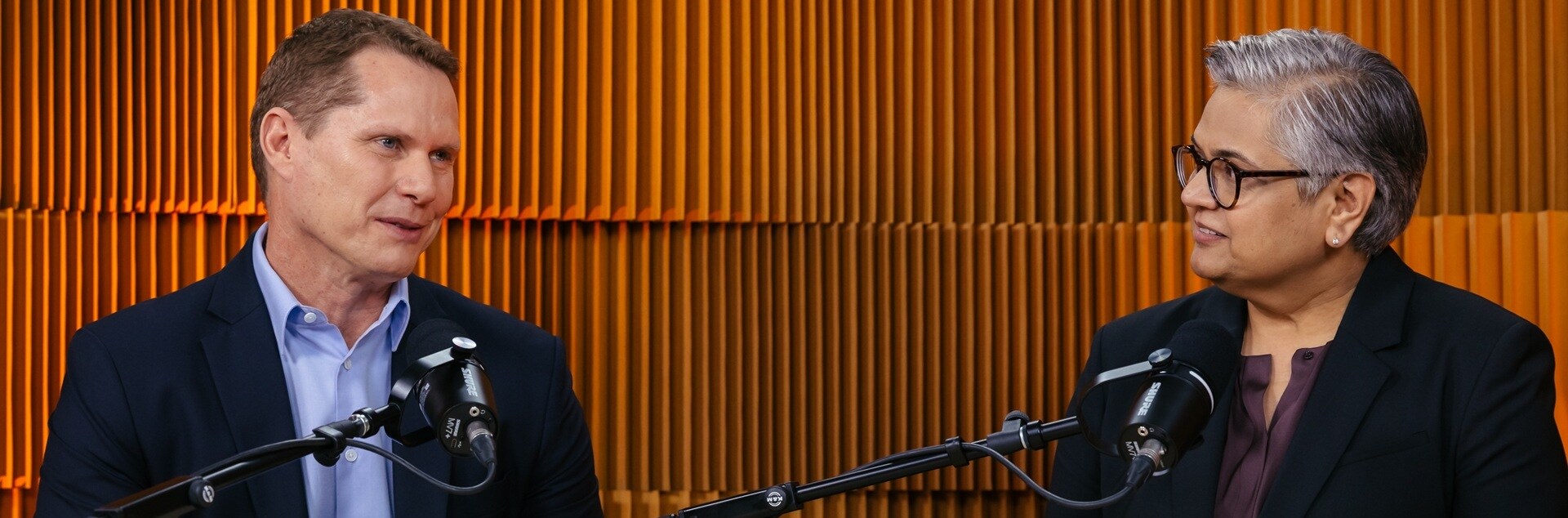
An edited transcript:
Belinda Ford, VP Communications: Hello, everyone. I'm joined today by our CEO Brandon Craig and our CFO Vandita Pant and we're going to talk today about the results BHP just released. But before we get to the results, there was a fatal incident at BMA's Peak Downs mine in Queensland. Brandon, do you want to address that first before we get into results?
Brandon Craig: Yes I do. I started in this role with the ambition to try and work through my entire tenure without there being a fatality at BHP. I have absolute conviction that we can be a business that is fatality free. And it's tragic when people inside our industry are fatally injured. And within the first month of starting, we had this event and of course, I made it a priority to try and get up to Peak Downs to meet with the team so that I could really understand what had happened. And I think there's clearly some learnings for us in BHP in terms of how we need to respond to this as a business. We've made really, really strong progress at eliminating fatalities from this business. So when they do come, it's important that we really learn from them.
Belinda Ford: I'll turn now to the results for the year, which were a strong set of results financially for BHP. Perhaps you could step us through some of the key numbers, Brandon and Vandita.
Brandon Craig: Well, the financial results are clearly very, very strong, but I think what really stands out for me is just the strong underlying performance from the business. And year-on-year this is a business that just continues to produce record production numbers. You can see that in our iron ore business in Western Australia, which produced another record, and it seems to be a year-on-year process that iron ore, that we do records. And I think very pleasingly, Escondida performed incredibly well. And what you see in our business in BHP is if the two big assets, which is our iron ore business and Escondida in Chile, when those two assets perform, the overall business performs and both of them had a very, very strong year. And you put that on the back of what has been really resilient iron ore prices and very strong copper prices has produced a really exceptional result.
Vandita Pant: Maybe I would add a few things: this is the first year that copper has contributed more than 50% to our earnings, and we are the largest copper producer. And we reiterated that position this year with 2 million tonnes of copper produced across our copper assets. Really strong balance sheet with all that cash coming through with the very high prices in copper as well as in iron ore, but equally because of our reliable performance that Brandon was just talking about. Really strong balance sheet, we end the year with less than $9 billion of net debt and that performance and that balance sheet strength, along with some of the capital unlocks we did during the year of more than 4 billion through an Antamina streaming deal. We have managed to give our highest dividend for the year in four years to our shareholders, which is fantastic. $8.7 billion of dividend for FY26.
Brandon Craig: And I think the operating system has played an essential role in that. And under Mike Henry, we invested a lot of energy across the Executive Team and all the teams in BHP to put in place a way of working that can really allow this business to drive productivity year in, year out. And again, you can see that reflected in our results. And Vandita set out some of the numbers, but across the business, I think we feel quite proud of what we've been able to deliver this last year.
Belinda Ford: Thanks, Brandon. I know people will be curious what your reflections are after your first 50 days in the role. So what are your what are you seeing as you look across BHP and what are your priorities?
Brandon Craig: Well, it feels a little bit more than 50 days. This process actually started quite some time ago. The Board ran a very thorough process for the election of the CEO, and the one benefit you get from that is you effectively have to put together a plan for what you want to do with the company. So you get to revisit the strategy, revisit the priorities, have a very close look at everything from where we want to allocate capital, the commodities we want to be in. And because of all of that, you start with a very clear idea of what it is you want to do. And then in addition to that, we also made sure we did a very good handover process.
So Mike and I spent nearly eight weeks on the road continuously traveling around the world, connecting with all the critical relationships we have in this business. And there are many across government, across investment banks, across our customers. We managed to see all of them and hand over those relationships.
And I think overall that was incredibly helpful because it allowed me on the first of July to actually have a clear plan of where I would like to take the company a clear set of relationships that I'd been connected to because of Mike and the way we manage the handover, which has really allowed me to start with a lot of momentum in BHP. But importantly, I do want to stress this is a case of we - it's the Executive Leadership Team. And we have an incredible team in BHP with Vandita and many others on the ELT. And they have been fantastic, they've got behind the agenda we've set out.
I think we're making really good momentum and that agenda sets out a couple of priorities. The first is we really want to strengthen our foundations across safety, social value and all the critical relationships we have in the business. We want to really push the boundaries on productivity. So we have very high aspirations for the further potential that exists in the business. And we want to pursue that through our Operating System, and also how we better leverage technology in BHP. And the more we look around us, the more we can see there are so many opportunities for us to do that. And the third is really just how we think about growth. We think we're in the right commodities at the moment. You know, I think you can see some of that in the results that have just been released. And on the back of that, if we can grow that portfolio further, in what I would describe as a programmatic sense that will allow us to add early stage options, exploration opportunities and a range of other sort of organic growth options is probably the best way to describe it, across commodities, we have high conviction in, which is potash and copper and some smaller projects in iron ore.
You put all of that together - I think we have a very good agenda going forward that will unlock a lot more value for shareholders. So we're quite excited by that.
Belinda Ford: What do we expect to see in copper in terms of growth for BHP? Can you give us a little bit of a flavour Brandon where that growth is coming from in the next decade?
Brandon Craig: Well obviously as BHP We're really excited about our future in copper, and we have a number of very significant growth projects that we're working on. Some of them are directly BHP operated projects and others are joint ventures and partnerships that we have with others.
But if I go through them quickly, we are expanding Escondida. Escondida is already the world's largest copper mine, but it's also going through a period of grade decline, and we really want to reinvest into that business with a new concentrator that will allow us to lift up production at that facility.
Sticking with South America, in Argentina, we also have a joint venture with Lundin Mining, and we're developing what I think is an incredibly exciting project in Argentina, that project is called Vicuna. It's going to be a multi-stage project that we invest in. We're hoping to get to a potential final investment decision as early as the end of this calendar year. But it stands to be a top five copper producer and a top five gold producer simultaneously once fully ramped up. So for that project in particular, we’re really, really excited and we've made significant progress with all of the engineering, the approvals and the relationship we have with our counterparty in Lundin is very strong.
Then, of course, right here in Australia we have the Copper South Australia smelter refinery expansion. And that has the potential, if we expanded to full capacity to get all the way to a million tonnes of copper equivalent production, and then we have further options that are longer dated, for example, Resolution in Arizona, in the US.
And so you put all of that together, this is a business that can go from 1.4 million tonnes of attributable copper today to a business that can get to 2 million tonnes and beyond into the future. And considering 1.4 is already the world's largest copper producer, it gives you a sense of the scale of what we're currently working on.
Belinda Ford: Vandita, can I ask how you think about funding that growth? Are we going to see a step up in capital expenditure. How should our investors think about it?
Vandita Pant: So we think about this a lot. We have some fantastic, attractive high quality growth options for copper. And we are growing in iron ore, we will have potash come in for production next year. And there is growth in BMA from just getting the latent capacity going. All that needs to be funded, as you said. And the way I think about this is starting with very strong balance sheet. And we are ending the year with very strong balance sheet, which is actually below our target net debt range at $9 billion. The second thing to think of is that our portfolio, as Brandon just said, is a diversified portfolio by design. And the important thing with that is that we get not only large but very resilient cash flows, whatever the commodity prices, our, portfolio will be able to fund all that growth. In fact, our copper CapEx growth portfolio in Chile, in Copper South Australia, in Vicuna in Argentina, and the long-term optionality in the US with Resolution, all that can be self-funded from copper's own generated cash flows, which is not what many companies can do. With very strong balance sheet already continuing, and of course, a business which continues to perform very well, which has huge generation of capital cash flows and as Brandon was saying, has huge momentum to keep going to the next level as well.
Belinda Ford: Thanks, Vandita. And our shareholders always ask us about our portfolio mix and coming in as our new CEO, Brandon, do you like the portfolio? Are there things that you want to add? How do you think about the portfolio?
Brandon Craig: Well, if you have a look at the underlying demand drivers for the commodities that we like, you can see copper as an example. There's 25 million tonnes, approximately, of primary copper production in the world today that's going to go to 35 million tonnes plus. That's an extra 10 million tonnes of production that needs to come online. And that is a pretty challenging number. So when you when you look at that, the demand for copper is incredibly strong, and we're sitting in the position as BHP with what I would consider the absolute best projects in the sector for bringing new copper into the market.
And then if you have a look at potash as an example, that's another area where we expect very significant long-term demand. That's a market that's currently 75 million tonnes of production, and that's going to grow to well over 100 million tonnes by 2050. So you can see there's going to be a future demand of 25 million tonnes plus. And through our Jansen one and Jansen two projects, we are hoping to add 8.5 million tonnes to meeting that demand. And we want to see that production come through over the next decade.
And then we’re obviously creeping production in iron ore. There's some smaller investments in iron ore. No less important. They're really, really important. And you'll see iron ore progressively increased to 305 million tonnes. And then if you have a look at BMA, there's a lot of work going into metallurgical coal, or steelmaking coal. And because of that we expect production performance in that asset to increase.
You put all of that together. You can see the market fundamentals for the products and the commodity mix we are in are very strong. We have very good conviction about those. And that is why you see the investment coming into the back of those particular choices.
Belinda Ford: Turning to China. China is obviously BHP's largest market, and we've seen iron ore price negotiations be more protracted than usual last year. How have you found the relationship with our major customers in China? Because I know you've been there recently.
Brandon Craig: I think you see a lot in the media on this particular subject. But, I would give our shareholders confidence that the relationships with our customers are very, very strong. When I was on the roadshow with Mike, the first thing we did was go and meet with customers in China. And importantly, just to signal again that those relationships that we have with our customers in China are critically important to our business. We value those relationships, and those relationships have many dimensions. There's clearly a mutually beneficial set of outcomes that happen between the two businesses, because there's a level of co-dependency in a way. Steel mills are dependent on iron ore. And the opposite is also true. But we also work together on things like decarbonisation projects and a range of other ventures. And we have done so for many, many years and that hasn't changed. Those relationships continue to be strong, and I'm confident they'll continue to be strong into the future.
Belinda Ford: Turning now to the topic that's been on everyone's minds around inflation and particularly around fuel prices and potential fuel shortages. Vandita, what's the impact for BHP and how is BHP managing this?
Vandita Pant: Fuel prices have been elevated as everyone who's listening to this will know. But we have very strong and multiple relationships with different suppliers globally, and those have led us to not have any disruption in our supply chain for diesel, for sulfuric acid, for inputs which are going into ammonia, for our explosives, etcetera. Of course, we have taken, as everyone will know, elevated prices and that has impacted around $200 million in our financials for the year. The volatility is not over yet as we know the conflict continues, but equally, we have confidence both in our long-term partnerships with the vendors as well as how we are managing and optimising our use of fuel and other inputs as well.
Belinda Ford: We've seen some increased Union activity in Western Australia recently. How's that impacting BHP, Brandon? And how should we think about that for the company going forward?
Brandon Craig: I think it's a very important question. We haven't had the Unions in the Pilbara for well over 20 years, and we have used that time as BHP to get into what we would describe as a direct engagement model. We recognise that when we offer competitive pay and conditions and that when we have a really good relationship with our workforce, that leads to improved work conditions, it leads to improved productivity, and it just simply makes our business a great place to work, a great place for our people to be. So we value that relationship we have with our workforce, and we want to continue to invest in it. Now, the Unions clearly have a right to enter into bargaining with us, and we respect the right of our workforce to participate in that. And we will naturally engage in good faith in those discussions. But none of that will take away from our determination to continue to really invest in our people and our teams. so that we can continue as BHP to offer the type of workplace that we think is a constructive and positive place to be, where people are valued and we can ultimately all win together.
Belinda Ford: I'm changing directions slightly, Vandita. Can you give us some updates on BHP's decarbonisation progress during the year, and specifically the progress on electrification?
Vandita Pant: Sure, so our greenhouse gas emissions have reduced by almost one third from our baseline of 2020. And on renewable, almost 80% of our assets now are powered by renewable energy. And there is more to come in the years ahead. Overall, I would say we're very confident we’re on track for meeting our 2030 target of 30% reduction on the base year of 2020.
Belinda Ford: Brandon. You talked a little bit about how you see accelerating BHP's performance. Can you expand on that and tell us where you see the opportunities for the year ahead?
Brandon Craig: Well. I think we started on safety and it's important I circle back there. This conviction we have in BHP to be a fatality free business is real. And it starts with needing to believe it. I certainly believe it. And we're going to be working really, really hard on making the necessary improvements and investments to become exactly that type of business.
And then in terms of accelerating performance, the Operating System has showcased what is possible, but there's still so much more headroom that exists. And if you have a look at what we would define as structural productivity, which is the difference between what the technical limit looks like versus where we are today, we can see there's still scope for significantly more productivity out of a business like ours. But we can also see that if you couple technology into the value chain of our business, the potential to push out the productivity frontier a little bit further also exists. So you can couple these two things together. And from that, you can see that the scope of potential for further improvements and returns.
And the final piece, and that would really be just the speed with which we can deliver the growth across the BHP Group. We can see the opportunity in potash, we can see the opportunity in copper, and we're working incredibly hard to try and make sure those projects are delivered incredibly quickly so we can get them to final investment decision, and then we can deliver the underlying copper equivalent growth across the whole group that ultimately will underpin the value of this organisation. And if we do all of those things really well, I think the future's looking really, really bright.
Belinda Ford: Before we close, Brandon, is there anything you'd like to say to our shareholders?
Brandon Craig: I'm certainly excited about the future. Let me just say that I think there is so much opportunity ahead of this company, and I'm really looking forward to working with the rest of my Executive Leadership Team to be able to deliver a future that I think can unlock those three themes we discussed earlier in the session. I definitely want this to be a safer business for the people that work in it. I absolutely want to pursue improved productivity over time to see how that can unlock further performance. And we want to grow the production base of this business, ultimately for the benefit of all of our shareholders and stakeholders. And I think the market conditions support that. I think we have the people inside the business that can make that a reality. And because of that, I'm really excited by what the future holds.
Related Content


