




Shared water challenges
We are working together on water challenges in the regions where we operate.
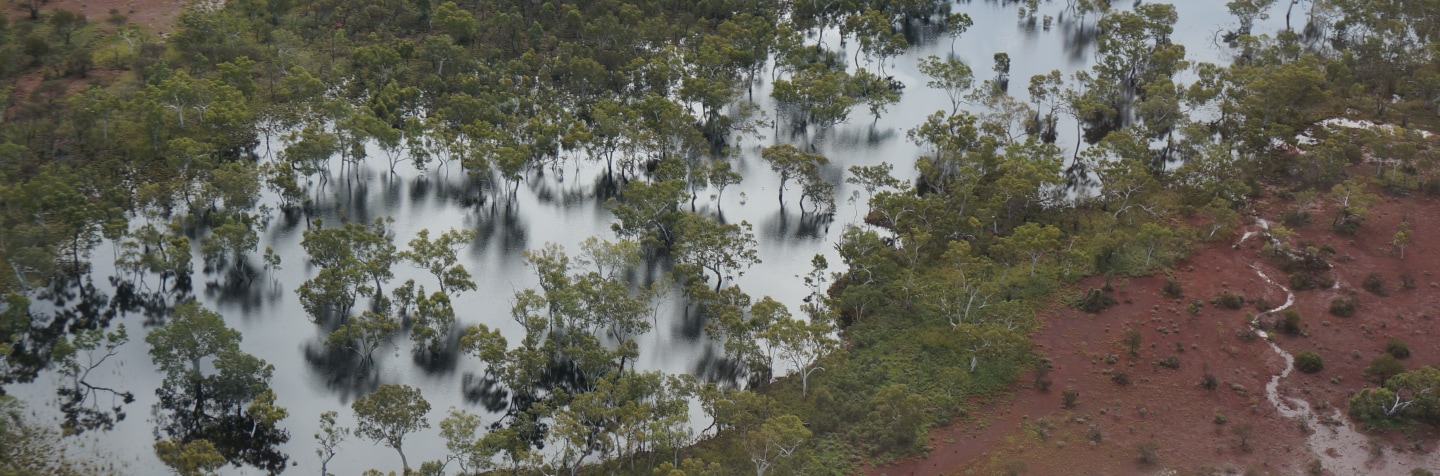
We released our Water Stewardship Position Statement in FY2019, which outlines BHP’s vision for a water secure world by 2030, an aim consistent with the United Nations Sustainable Development Goals.
Water is a shared resource that connects our operations with communities, Indigenous peoples, ecosystems and other water users. The availability, quality and governance of water vary significantly by location, and water challenges are often best understood and addressed at a catchment scale.
In our Water Stewardship Position Statement, we commit to set public, context-based business-level water targets that aim to improve our management of water and support shared approaches to water management within the regions where we operate. These targets are informed by our internal catchment risk assessments and Water Resource Situational Analyses (WRSAs).
What is a Water Resource Situational Analysis (WRSA)?
A Water Resource Situational Analysis is an independent, catchment-scale assessment of shared water challenges in the regions where BHP operates.
Each WRSA is prepared by an independent third party using publicly available information and stakeholder input to describe the sustainability of water resources, governance arrangements, and the social, cultural, environmental and economic values of water within a defined catchment.
WRSAs identify shared water challenges, their root causes, and opportunities for collective action. They are public‑facing documents and are enabled by, but undertaken independently from, BHP. Outcomes of WRSAs, alongside internal catchment risk assessments, inform the development of our context‑based water targets and actions to improve water stewardship.
The WRSA approach
The WRSA process is led by an independent third party with experience in water governance, social research and stakeholder engagement. It typically includes:
- Desktop analysis of public information on water availability, use, governance and environmental conditions, including climate change projections
- Consideration of social, cultural and economic factors, including community water access and water dependent ecosystems
- Voluntary engagement with stakeholders to validate challenges, understand root causes and identify opportunities for collaboration
Stakeholder participation is voluntary and engagement is conducted independently of BHP’s other stakeholder engagement processes.
Indigenous peoples and water
We recognise that current WRSAs may not fully reflect the culturally intrinsic relationships Indigenous peoples have with water, including connections to cultural heritage, traditions and lore.
In a manner consistent with BHP’s Indigenous Peoples Policy Statement, we are working to strengthen how we engage with Indigenous peoples on matters of water and the broader environment in the regions where we operate. Consistent and meaningful dialogue will help to improve our understanding of Indigenous values for water and support opportunities to work together, including to co‑design environmental management approaches that respect Indigenous rights, interests and custodianship.
We aim to build long‑term, shared understanding approaches for engagement and seek opportunities to support Indigenous groups to collect, store and share their water and environmental knowledge.
Understanding catchment risks
In addition to WRSAs, our operated assets are required to identify and assess environment-related risks, including water-related risks at a catchment scale. This helps inform our understanding of the water-related risks and opportunities associated with our operations.
These assessments consider catchment-scale water-related risks and opportunities associated with our operations and the wider catchment, and help inform risk management actions. Together with WRSAs, these risk assessments support our approach to setting our context-based water targets (CBWTs). This combined approach helps ensure our targets respond both to shared catchment-level challenges identified by stakeholders and to asset-specific risks within our control.
For more information on how we manage water‑related risks, refer to our Nature and Environmental Performance webpage.
Context-based water targets
Targets that aim to address the shared challenges and opportunities within the catchments where we operate.
Context-based water targets (CBWTs) aim to help address the water challenges shared by BHP and other stakeholders in the regions where we operate. They are informed by WRSAs, internal catchment risk assessments and stakeholder engagement, and reflect both shared catchment priorities and asset-specific risks within our control.
Our CBWTs include:
- actions to address our own operational water performance
- actions intended to deliver collective benefit for catchments, communities and Indigenous peoples
The targets recognise that water challenges vary by location due to physical, social and cultural differences. For example, in regions where our water supply is predominantly sourced from desalinated sea water, marine protection and water‑use efficiency are key considerations, while in other regions water availability, quality or ecosystem health may be more material challenges.
We released our first suite of asset-level CBWTs in FY2023 and have developed CBWTs for our operating assets, which are designed to apply through to FY2030 and include milestones that track progress towards the longer-term outcomes. Milestones are intended to provide transparency on progress and support accountability over time.
We may release additional or updated targets in the future where appropriate to reflect changes in operating context, environmental conditions, stakeholder priorities or asset portfolio configuration.
While quantitative targets are preferred where practicable, some actions, particularly those intended for collective benefit or involving complex, water-dependent ecosystems, may require building shared understanding before measurable outcomes can be defined. We will continue to review the relevance of CBWTs and associated milestones as collective understanding of catchments grows and internal and external contexts evolve.
Progress on the CBWTs and milestones is described in the BHP Annual Report 2026, Operating and Financial Review 9.9 – Nature and environmental performance, and BHP ESG Standards and Databook 2026. For information on performance in previous years, refer to the past reports section of the BHP Annual Report webpage.

Context
The Water Resources Situational Analysis (WRSA) for the Central Queensland region describes the hydrological setting for the region and the shared water challenges and opportunities recognised by people of the region.
Targets
| Action to improve BHP's water performance | Support water stress reduction in the Fitzroy Basin through better use of water in our operations |
Milestones FY2027 – less than 20% of operational water use will be sourced from BMA’s water allocations (based on median (P50) rainfall conditions). |
| Action for collective benefit | Support equitable access to water in the Fitzroy Basin by making more water available for other users |
Milestones FY2024 – make available unutilised1 BMA water allocations to the temporary water trading market for each year from FY2024. |
Footnote
1 Some water allocations at BMA are not made available for sale ‘in year’ and are retained for strategic contingency purposes as ‘carry over’. Unutilised ‘carry over’ is subject to ongoing assessment throughout the year as to what can be made available. At 30 June, any unused ‘carry over’ amounts are incorporated into the following financial years ‘in year’ water for the total river scheme’s announced allocations by the Resource Operator.
Why these targets
BMA operates five metallurgical coal mines in the Fitzroy Basin in central Queensland, a region where water supports multiple environmental, cultural, social and economic values. Water availability in the basin is inherently variable and influenced by seasonal rainfall variation, creating shared challenges for communities, ecosystems, agriculture and industry.
The WRSA identified water availability for economic and social wellbeing, alongside the need to support healthy ecosystems, as key challenges shared by stakeholders in the Fitzroy Basin.
The context-based water targets for BMA focus on reducing our operational reliance on regional water allocations and improving water efficiency through increased use of mine-affected water. By improving internal water efficiency and reducing reliance on allocations where practicable, these actions are expected to enable more water to be made available for other users in the basin, supporting our commitment to improve access to water.
Water supply at BMA is dependent on rainfall. Significantly drier than median conditions may affect the extent to which operational water sourced from allocations can be reduced in a given year.
The FY2024 baseline upon which the FY2027 and FY2030 CBWT milestones are based was reset in FY2025 to remove Blackwater and Daunia.
Context
The Water Resource Situational Analyses (WRSAs) for the High Andes of the Tarapaca and Antofagasta region and the coastal zones of Bahia de Mejillones and Bahia San Jorge, all in northern Chile, describe the hydrological setting for these regions, and the shared water challenges and opportunities recognised by people of the region. We added an addendum to our Andean aquifers and San Jorge Bay WRSAs (English and Spanish) in FY2025 after stakeholder consultations were initially delayed due to social unrest in Chile. This addendum, which reflects the participation of various actors, presents the updated shared challenges and opportunities for collective action for the Altoandina macrozone in the Tarapacá and Antofagasta regions and for San Jorge Bay, all in northern Chile.
Targets
| Action to improve BHP's water performance | Contribute to the collective preservation and restoration of the aquifers and associated wetlands in northern Chile through cessation of operational use of terrestrial water sources from water scarce areas. |
Milestones FY2024 – cease extraction of terrestrial water for Cerro Colorado operational use |
| Action for collective benefit | Improve the water efficiency in mining operations by 10% at Escondida and 10% at Pampa Norte from the FY2022 baseline, aiming to optimise marine water use. |
Milestones FY2026 – improve the water efficiency by 5% at Escondida and 5% at Spence from the FY2022 baseline1 |
Why these targets
Escondida and Pampa Norte (which includes the Spence and Cerro Colorado mines) have three copper mines in the arid Andes of northern Chile, a port and desalination facilities in the coastal zone that lies west of the mines. Cerro Colorado entered temporary care and maintenance in December 2023.
We aim to remove our operational reliance on groundwater from arid areas and support the recovery of wetlands impacted by groundwater withdrawal. Since 2015, Escondida progressively reduced groundwater withdrawals for operational water supply, ceasing withdrawals in 2019. Since FY2020, Escondida’s operational water withdrawals2 have been sourced from desalinated ocean water that is generated using renewable energy.
The use of desalinated ocean water is growing in northern Chile and there are now more than 20 major desalination plants along this coastline. Desalination facilities are not known to have broad regional effects but the cumulative effects of this rapid growth on marine ecosystems are not yet clear. Target 2 will minimise BHP’s use of marine water and contribution to the cumulative effects.
Footnotes:
1 Data used for Spence’s FY2022 baseline has been restated in the FY2026 ESG Standards and Databook to incorporate corrected and validated volumes from the commissioning period for a new concentrator, which was not fully captured in the original FY2022 reporting.
2 Small quantities of groundwater are extracted for pit dewatering and to recover seepage from tailings and other operational facilities, to enable safe mining and support environmental control.
Context
The Northern Goldfields Water Resources Situational Analysis (WRSA) describes the hydrological setting for the region and the shared water challenges and opportunities recognised by people of the region.
Targets
The Western Australia Nickel (WAN) CBWT and milestones have been removed due to changes in regional catchment governance since the CBWT was set in FY2023. The Tijwarl Aboriginal Corporation has entered into an Indigenous Land Use Agreement with the Western Australian Government, which includes the establishment of the Tjiwarl Water Study and a framework to develop a Tijwarl Water Plan. As a result, the opportunity for WAN is to support governance initiatives led by the Tijwarl Aboriginal Corporation rather than lead those initiatives as envisaged by the CBWT. Given WAN’s operations remain temporarily suspended, BHP has not established an alternative public CBWT for WAN at this time. WAN intends to continue to contribute to regional water stewardship through participation in the Northern Goldfields water working group, and by providing relevant data and technical input to support Tijwarl-led water planning processes.
Context
The Water Resources Situational Analysis (WRSA) for the Central and Northern Arid Lands of South Australia describes the hydrological setting for the region and the shared water challenges and opportunities recognised by people of the region.
Targets
|
Action to improve BHP's water performance |
Contribute to conservation of the ecosystem function of the Great Artesian Basin (GAB) mound springs |
Milestones FY2024 – implement a permanent daily abstraction limit on Wellfield A at 5 ML/d FY2030 – cease abstraction from Wellfield A through switching to coastal desalination supply in partnership with the South Australian Government on the Northern Water Supply Project |
| Action for collective benefit | Contribute to conservation of the ecosystem function of the GAB mound springs through direct conservation and research programs in the Arid Lands region |
Milestones FY2025 – protect springs from animal and human degradation by fencing and controlling feral animals and weeds on BHP pastoral leases, and contribute to similar programs off-lease FY2026 – increase public knowledge of the GAB by contributing BHP data to a South Australian centralised public GAB springs database FY2030 – increase knowledge of the GAB by funding research into GAB endemic species (longitudinal technical research) |
Why these targets
Copper South Australia operates Olympic Dam, a copper mine and processing facility in the Arid Lands region of South Australia. The only permanent waters in the Arid Lands are groundwater from the Great Artesian Basin aquifer (GAB) and the mound springs (named for mineral deposits around their mounds) formed by seeping groundwater. Broad lakes also form temporarily after occasional large rainfall events. Several Indigenous groups maintain their enduring connection to the lands and waters of the region. Pastoralism, mining and petroleum extraction are the main industries.
The WRSA found that a key shared challenge was impacts to the groundwater dependent ecosystems caused by historical and ongoing extraction from the GAB. The first milestone of Target 1 was achieved in FY2024, reducing groundwater extraction from Wellfield A. Full delivery of Target 1 will be achieved through partnership with the South Australian Government on the Northern Water Project, enabling cessation of extraction from Wellfield A.
Target 2 states that we will contribute to the understanding and direct protection of the mound spring ecosystems in our own landholdings and more broadly. Helping others with these key activities is an important opportunity for collective action recognised in the WRSA.
In FY2025, BHP reviewed the suitability of the existing Olympic Dam WRSA and CBWTs for their applicability to the broader Copper South Australia asset. The incorporation of Carrapatena and Prominent Hill has not introduced new material water-related risks into our Copper South Australia asset. Therefore, it was determined that the focus of this asset’s CBWTs will remain on the GAB aquifer and the existing Olympic Dam WRSA and CBWT are appropriate to apply to the broader Copper South Australia asset.
Context
The Pilbara Water Resources Situational Analysis (WRSA) describes the hydrological setting for the Pilbara region and the shared water challenges and opportunities recognised by people of the region.
Targets
| Action to improve BHP's water performance | At least 50% of WAIO surplus water will be prioritised for beneficial use to improve the sustainability of regional groundwater resources or generate social value. |
Milestones FY2026 – install and commission additional capacity in the Central Pilbara for beneficial use of surplus water |
| Action for collective benefit | By FY2026, in collaboration with others, we will establish a regional water data sharing solution to support catchment scale planning and management for the Pilbara. |
Milestones FY2024 – initiate and support a collaborative scoping study for a regional water data sharing solution |
Why these targets
Western Australia Iron Ore (WAIO) is an integrated system of four processing hubs and five mining hubs, connected by a rail system and port facilities in the Pilbara region of Western Australia. Wherever WAIO operates in the Pilbara, it does so on the traditional lands and waters of Indigenous peoples. The Pilbara has seen considerable growth in resource development activity, which includes a large increase in groundwater abstraction for mine dewatering – a key challenge identified by the Pilbara WRSA. BHP will aim to minimise our effect on the groundwater resource by prioritising at least half of WAIO surplus water to be used beneficially, for example, by returning it to nearby groundwater aquifers. This will involve the building and operation of large water distribution networks and Managed Aquifer Recharge borefields, subject to the required external approvals.
The Pilbara WRSA also revealed that stakeholders recognise shared access to the data held across many water-involved organisations in the Pilbara is a vital step for sustainable water resource management. We will work with interested groups to develop a data sharing platform that supports broader collaboration for developing a shared understanding of current and emerging water catchment challenges and solutions.
Context
The Hunter Region Water Resource Situational Analysis (WRSA) describes the hydrological setting for the Hunter River catchment and the shared water challenges and opportunities recognised by people of the region.
Targets
| Action to improve BHP's water performance | We do not intend to develop a target to ‘improve BHP’s water performance’, given NSWEC is undertaking a managed process to cease mining at the Mt Arthur Coal mine by the end of FY2030. | |
| Action for collective benefit | Enhance ecosystem connectivity through revegetation and targeted restoration along the Hunter River riparian zones |
Milestones FY2027: Restoration plan is developed, with community input, and riparian restoration works have commenced |
Why these targets
New South Wales Energy Coal (NSWEC) operates the Mt Arthur coal mine in the Hunter Valley of New South Wales, Australia. The mine is nearing the end of its life and BHP has announced it will close in 2030.
The Hunter River catchment is the largest in New South Wales and includes a complex network of rivers, streams, wetlands and extensive groundwater systems. Flows in the catchment have been highly modified by human activity, including several dams installed for water supply, flood mitigation and power generation. The catchment supports important ecological features and processes, including the Ramsar-listed Hunter Estuary Wetland at the mouth of the Hunter River (120 kilometres downstream of Mt Arthur).
The CBWT for NSWEC is informed by the state of mining and by a key finding of the Hunter River WRSA that the poor condition of riverbed, riverbank and riparian vegetation along the Hunter River is seen by stakeholders as a critical water-related challenge. We will determine priority areas along a 10-kilometre stretch of the Hunter River and complete targeted restoration to help improve ecosystem connectivity and stabilise creek banks and riparian zones along the river.
Context
The Cobre Valley Watershed Action Plan describes the hydrological setting for the Cobre Valley catchment and the shared water challenges and opportunities recognised by people of the region. This report was not financially supported by BHP but had similar objectives to the WRSAs supported by BHP in other areas.
The Serpent River Watershed WRSA describes the hydrological setting for the Serpent River catchment in Northern Ontario, Canada, and the shared water challenges and opportunities recognized by people of the region. CBWTs have not yet been set for Elliot Lake.
Targets
| Action to improve BHP's water performance | Improve the sustainability of regional water resources by diverting natural water flows around mine-affected areas in the Globe-Miami sites |
Milestones FY2027: Evaluate the current conditions of water management across the site and develop a plan/set targets for improvement of separation |
| Action for collective benefit | We intend to develop a ‘collective benefit’ target in the future. |
|
Why these targets
Legacy assets manages 21 non-operating sites across four states in the United States and four provinces in Canada. These sites were acquired through mergers and acquisitions and mostly focused on the production of copper, zinc, uranium, tin and gold. Most of these sites finished production decades ago.
This CBWT focuses on the Globe-Miami area of Arizona where there is a long history of mining, beginning in the 19th century and continuing to this day. Legacy assets manages four closed sites in this area: Miami Unit, Copper Cities, Old Dominion and Solitude. A key management activity is the ongoing diversion, storage, movement and treatment of water to maintain the quality and quantity of regional water resources.
The CBWT was informed by stakeholder priorities identified in the Cobre Valley Watershed Action Plan, a 2022 report by the Cobre Valley Watershed Partnership which was not financially supported by BHP but had similar objectives to the WRSAs supported by BHP in other areas.
Legacy assets will increase the amount of water diverted around disturbed areas and improve design of water storage/management infrastructure, allowing it to flow directly to creeks and washes downstream of the sites. This water would otherwise be captured for treatment and some would be lost to evaporation or seepage. The progressive reduction of the mining footprint, in this case through its effects on water, helps closed sites to become more stable.
Footnotes for all tabs:
All targets and milestones refer to the end of the quoted year. FY refers to the Australian financial year, which runs from 1 July to 30 June.
All baselines are subject to adjustment for any material acquisitions and divestments, and to reflect progressive refinement of relevant methodologies, for example in water reporting.
Surplus water is groundwater abstraction to allow mining below the water table that is surplus to operational water use requirements.
Beneficial use is water used in ways that contribute to environmental resilience, social benefit or economic growth. For example, water returned to aquifers to reduce pressure on regional groundwater resources; or transfer of surplus water to another operational use to avoid or reduce the need for additional natural water resources.
Threatened ecological communities are those nationally listed threatened ecological communities determined by the process under the Australian Commonwealth Environment Protection and Biodiversity Conservation Act 1999.
Sustainability case studies, organisational boundary, definitions and disclaimers, and downloads
-
BHP Annual Report 2026pdf

-
Sustainability reporting organisational boundary, definitions and disclaimerspdf
-
Límite organizativo de los informes de sostenibilidad, definiciones y descargos de responsabilidadpdf
-
BHP ESG Standards and Databook 2026xlsx
-
BHP Group Modern Slavery Statement 2026pdf
-
BHP Annual Report 2026, Sustainability Report 7.6 Methodology for calculating Scopes 1, 2 and 3 GHG emissions

-
BHP Climate Transition Action Plan 2024, subject to updates of certain aspects of our assumptions and plans in the BHP Annual Report 2025, Operating and Financial Review 9.8, and BHP Annual Report 2026, Operating and Financial Review 9.10 and Sustainability Reportpdf
-
Global Industry Standard on Tailings Management – Public Disclosure 2026pdf
-
Tailings Storage Facility Policy Statement 2026pdf
-
Case studies