



Protecting Australia’s unique fauna
Updated 18 August 2026
Many of Australia’s threatened species are at risk due to predation by invasive pests, such as feral cats and red foxes. Fenced reserves on Australia’s mainland can provide vital protection to small, threatened fauna by helping create safe havens that exclude predators from native habitats.
The Arid Recovery reserve, Australia’s largest predator-proof reserve, covers 12,300 hectares and is adjacent to our Olympic Dam operations in South Australia’s arid interior. Our predecessor at Olympic Dam, Western Mining Company, was a founding partner of Arid Recovery in 1997 and we have continued to provide funding and support under our social value framework.
Since 1997, five native threatened mammal species have been successfully reintroduced to the Arid Recovery reserve: the burrowing bettong (Bettongia lesueur), greater bilby (Macrotis lagotis), Shark Bay bandicoot (Perameles bougainville), western quoll (Dasyurus geoffroii) and kowari (Dasyuroides byrnei).
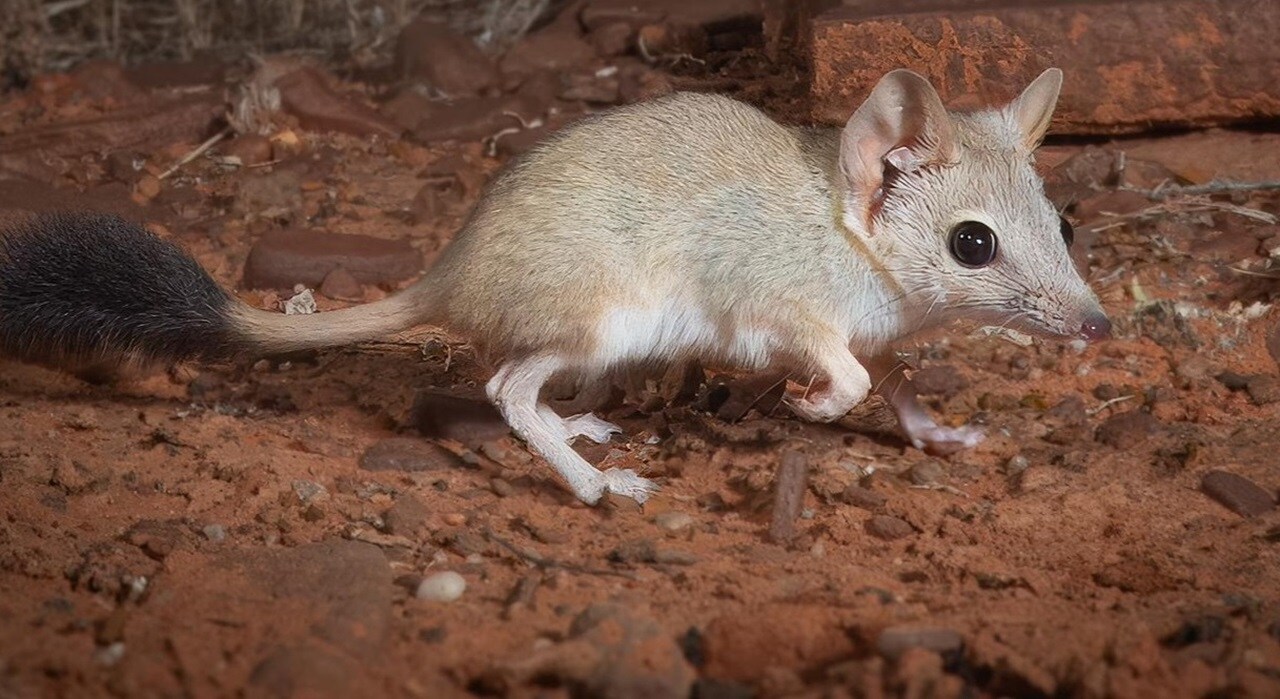
The kowari was the most recent species to be reintroduced to the Arid Recovery reserve in 2022. This small, native carnivorous marsupial is often described as ‘the cutest marsupial you’ve never heard of’ because, despite being once widespread across northern South Australia, these elusive creatures now occupy less than 20 per cent of their former range. With the current wild population size estimated at just 1,200 to 5,000 individuals, the kowari faces risk of extinction within the next two decades if action is not taken. As a result, the species’ conservation status was upgraded from Vulnerable to Endangered in 2023.
With support from the Australian Government’s Environment Restoration Fund Safe Havens program, Arid Recovery embarked on a mission to establish an insurance population of kowaris within the reserve to help safeguard the species should wild populations continue to decline.
In 2022, 12 kowaris were reintroduced into the reserve and closely monitored using remote cameras, radio tracking and live trapping. In late 2024, camera trapping recorded a surge in detection activity after significant rainfall, a reminder of how closely life in the arid zone is tied to rain and the boom that follows. The population has also expanded from the original reintroduction site to three separate paddocks within the Arid Recovery reserve – an encouraging sign of early success. Since 2024, biannual trapping surveys have continued to add to understanding of this species, revealing healthy body condition, ongoing breeding and a steadily increasing population. From the original 12 founders, the known population was recorded at 35 individuals in 2025. Arid Recovery currently supports the only protected kowari population in South Australia.
Very little is known about kowaris in the wild, including the specific threats they face, making effective conservation challenging. Arid Recovery is studying the behaviour and ecology of the kowari, and the threatening processes they face to help inform more effective management and support the long-term recovery of the species. Learning more about kowaris within a fenced reserve will generate knowledge to guide better conservation decisions both within and beyond fenced reserves.
While the kowari remains endangered in the wild, this project marks an important step in helping to secure its future.
Learn more about the work Arid Recovery is undertaking with the kowari here: Arid Recovery
A kowari within the Arid Recovery reserve, South Australia. Photographer: Jack Bilby (Arid Recovery)
Related Content


