




Testing tomorrow’s technology: Battery‑electric heavy-haul truck and locomotive trials
Trials commenced
We have commenced proof-of-concept trials of battery-electric haulage technologies at our Pilbara operations. This includes a trial of two battery-electric haul trucks operating on a dedicated test track at Jimblebar. These trials are designed to generate practical insights into performance, including range, energy consumption, battery behaviour, charging performance, reliability, safety and overall productivity. They also provide an opportunity to understand how the technology could integrate into mining operations, through structured learnings and feedback from operators, maintenance teams and project personnel.
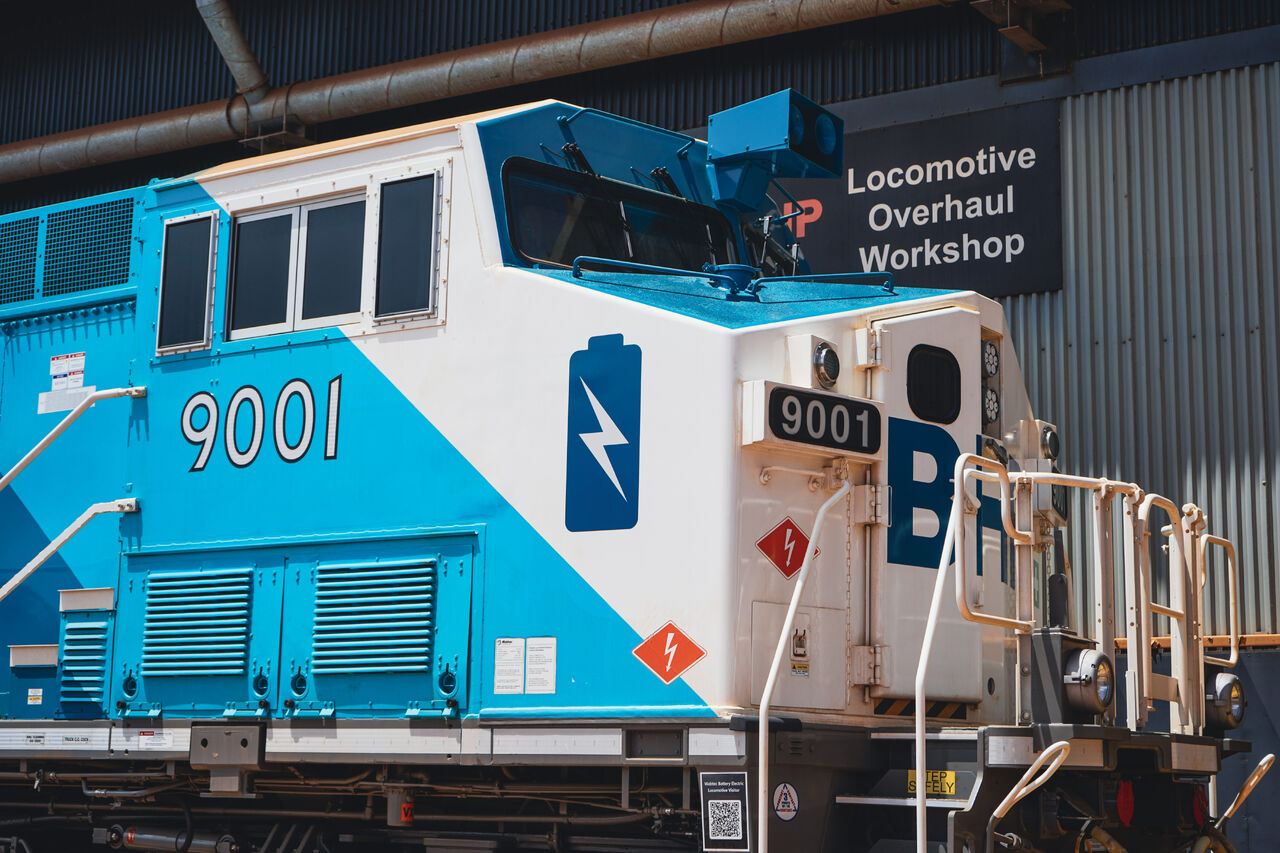
In FY2026, we commenced commissioning of two purpose-built Wabtec FLXdrive heavy-haul battery-electric locomotives in Port Hedland, marking the beginning of the trial program. Two further locomotives from Progress Rail were delivered to Perth in FY2026 and to be transported to Port Hedland for commissioning and testing in FY2027.
Once locomotives from both original equipment manufacturers are in trial, we expect to be one of the first mining companies globally to conduct side-by-side evaluations of battery-electric heavy haul locomotive technologies from two suppliers within the same operating environment. This creates a unique opportunity to compare technologies and accelerate learning in large-scale rail applications.
Purpose of the trials
Across the mining industry, alternatives to diesel for large-scale haulage are still under development. Trials are designed to assess whether battery-electric equipment can safely and productively operate in a mining environment, while helping us understand the operational, infrastructure and workforce requirements needed to support broader deployment.
A staged, trial-based approach allows us to identify and manage key risks related to safety, productivity, charging integration, equipment performance, maintenance capability and supply chain readiness. The trials will also help us understand the broader infrastructure and energy requirements associated with fleet electrification, including power generation, distribution and charging systems.
Early insights and next steps
Early insights from the trials are reinforcing that electrification represents a system-level transformation rather than a simple replacement of diesel equipment. Electrification is also expected to increase electricity demand, requiring fleet electrification planning to be closely integrated with site power strategies, particularly in remote operations where charging demand, peak loads and system reliability must be carefully managed to support safe and efficient operations.
As trials progress, we will continue to build our understanding of battery performance, equipment reliability and energy management requirements. Insights gained will inform how we address these challenges, guide decisions on future trial expansion, and help determine how and when future technology could be adopted at scale as technology readiness, markets and supporting ecosystems continue to develop.
Related Content


