




Strengthening dust management through real time response
Why air quality matters
Clean air is important for the health of our workforce, host communities and surrounding environments. This case study focuses on actions taken to strengthen dust management at New South Wales Energy Coal (NSWEC) in Australia.
Our approach to managing dust
We manage air quality using risk‑based assessments, monitoring, source identification and incident tracking. Jurisdictions in which we operate have regulatory requirements relating to air quality, and controls are implemented to support compliance with these obligations. Where air quality risks are material, our Environment Global Standard requires the implementation of controls and plans to manage impacts, which may include monitoring, mitigation measures, stakeholder engagement, defined objectives and performance reporting.
Actions delivered on site
New South Wales Energy Coal (NSWEC): Real‑time monitoring to enable responsive dust control
At NSWEC, dust management and decision-making utilises real‑time air quality monitoring. Monitoring systems integrate particulate matter data and meteorological conditions to enable immediate response when conditions increase dust risk. This allows operational controls to be adjusted in real time, helping to support timely mitigation and reducing the likelihood of off‑site dust impacts while minimising impact to production.
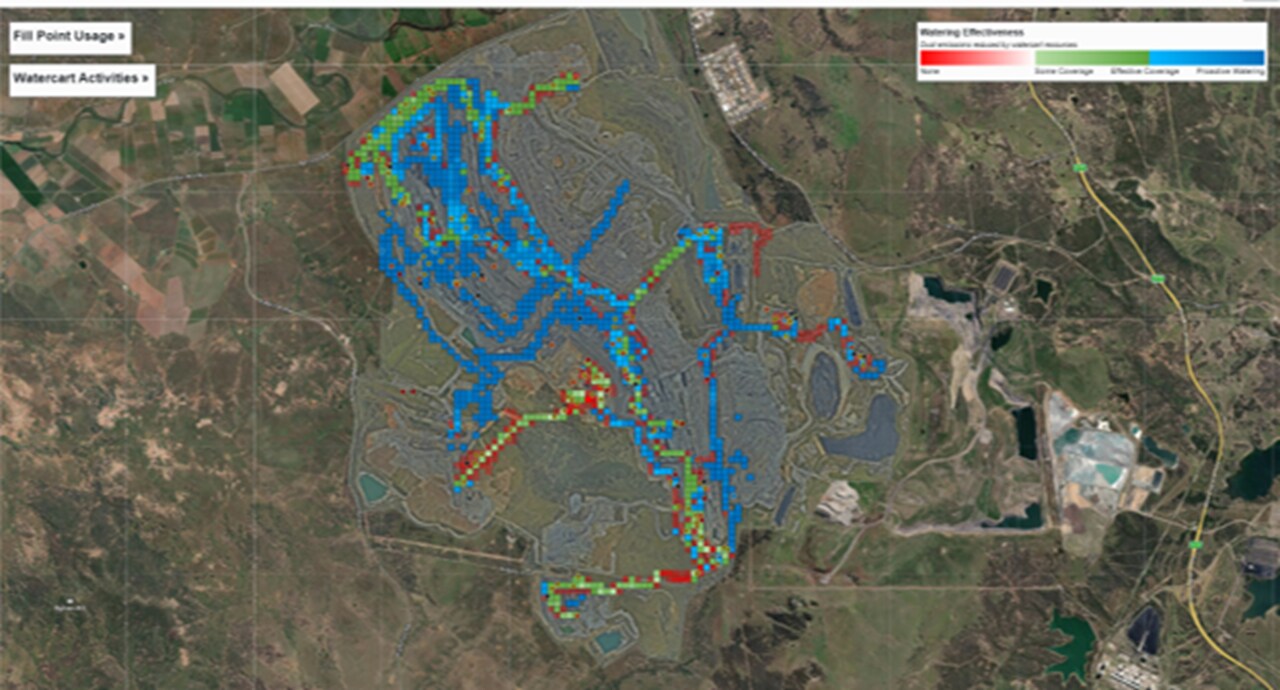
Improvements have been implemented to increase the effectiveness of mitigation measures and make targeted decisions. The Dust Control System (DCS) managed by NSWEC now incorporates all fleet movement activity allowing operational teams to review watercart coverage against active haul routes as shown in the Figure below. This data is currently being used to develop and test potential predictive functionality, such as estimating dust emission risk linked to fleet positions to enable proactive controls and minimise unnecessary downtime.
Related Content


