




Royal Life Saving Society of WA – Talent Pool partnership
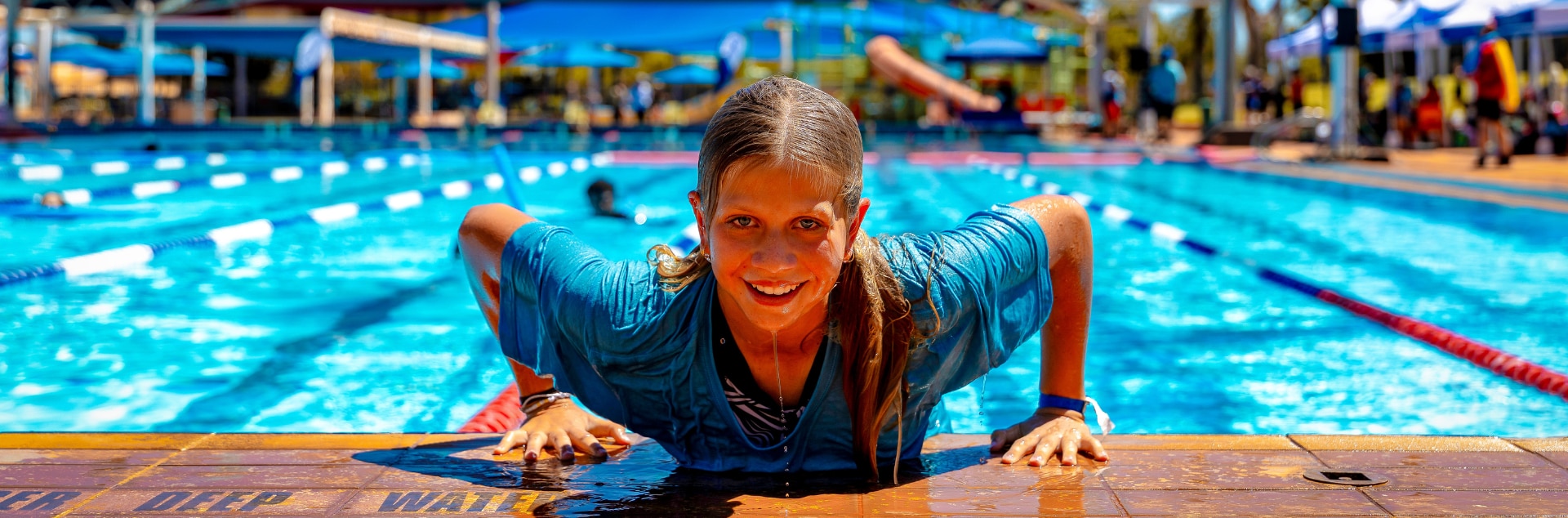
For more than 20 years, BHP’s partnership with Royal Life Saving Society of Western Australia (RLSSWA) has worked with regional and remote communities across Western Australia to support locally relevant water safety, skills development and employment opportunities.
Communities across regional and remote Western Australia bring deep knowledge of water, Country and community-led approaches to keeping children and families safe. Access to aquatic facilities, accredited training and locally available employment pathways varies between locations, including in the Pilbara. Available data indicates unequal water-safety outcomes for Aboriginal people, shaped by factors including remoteness, infrastructure and access to locally appropriate programs.
Since 2003, BHP and RLSSWA have worked with participating communities across WA Iron Ore and WA Nickel host regions to support aquatic programs that respond to local priorities and circumstances. Activities span early years and school-aged swimming, water safety education, aquatic qualifications, community events and employment pathways. Programs include Infant Aquatics, Swim and Survive, Swim for Fruit, Junior Lifeguard Club, Paddle on Country, Spirit Carnivals and the Talent Pool Program. This investment has contributed to increased participation in water safety programs and some initiatives have also connected aquatic participation with school engagement. More than 700 participants have completed Bronze Medallion qualifications, supporting access to lifeguarding and other aquatic employment opportunities. Where developed with local communities, initiatives such as ‘Paddle on Country’ connect water-safety activities with local knowledge, Country and community priorities. BHP has invested more than $5.2 million in the Water Safe WA programs across Western Australia since the partnership began.
In FY2026, more than 18,000 people participated across eight BHP host communities. Through the Talent Pool program, 76 young people moved into employment, compared with a target of 65. More than 12,000 children also took part in the Swim and Survive program.
The partnership aims to support priorities identified with participating communities, including water safety, locally available skills and employment pathways. It also aligns with BHP’s Social Investment Framework and Indigenous Peoples Strategy, and supports progress against our Thriving, empowered communities pillar and metrics and milestones in our social value scorecard. Future program development will be informed by participating communities, with a continued focus on locally identified water-safety priorities, recognised qualifications and employment opportunities.
Related Content


