




Progressing multiple technology pathways to achieve our steelmaking decarbonisation 2030 goal
Reducing greenhouse gas (GHG) emissions in steelmaking will require progress across multiple technology pathways. In line with our customers’ own decarbonisation plans, we are helping to advance both near term improvements to existing operations for more immediate emissions intensity reduction and longer term pathways to support steelmakers to prepare to reduce emissions in the future.
Reducing emissions for existing blast furnace operations
Reducing the carbon dioxide (CO₂) intensity of the blast furnace is a core pillar of many of our customers’ decarbonisation pathways ‒ an important opportunity given it is expected to remain the incumbent technology for steel production over the coming decades. As metallurgical coke, the primary fuel, cannot be fully substituted in the blast furnace process, carbon capture and utilisation or storage (CCUS) will need to play an important role in reducing emissions. Carbon capture is already commercially available in other industries, but its application to blast furnace gas streams is not yet proven at scale.
To address this, we are working with customers and technology providers to deploy pilot projects across multiple regions, testing how these technologies perform on real blast furnace off-gases to confirm technical feasibility and support potential scale-up. Two capture technology pilots have completed test phases and demonstrated performance above thresholds of CO2 capture rate and CO2 purity in the separated gas stream as follows:
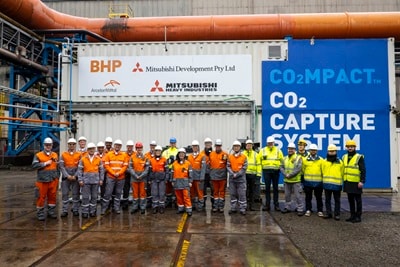
- Amine-based CO2 technology provided by Mitsubishi Heavy Industries (0.3 tonnes per day capacity) in partnership with BHP and Mitsubishi Development, and tested at the ArcelorMittal Ghent operations for 4,500 hours, achieved an over 90% CO2 capture ratio and 99.9% dry CO2 purity in the separated stream. This demonstrated the potential to achieve a 24% carbon emissions reduction at the Ghent integrated blast furnace site. The project partners have now commenced testing of post-combustion flue gas from the steel rolling mill reheat furnace.
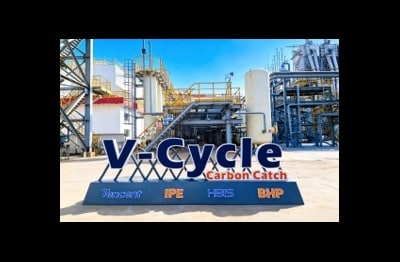
- Vacuum pressure swing absorption technology (maximum 7.8 tonnes per day capacity) tested at the HBIS Tanggang site and operated for 2,000 hours, achieved an over 90% CO2 capture ratio and over 95% CO2 purity in the separated stream.
These results demonstrate that carbon capture is technically viable for application on blast furnace gas.
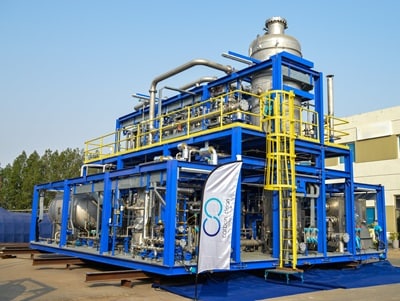
We are now also progressing towards the demonstration of innovative carbon capture technology and larger scale applications. In collaboration with JSW and Carbon Clean, we are progressing a study for development of a 100,000 tonnes per annum (280 tonnes per day) carbon capture plant in India at the JSW Steel, Vijayanagar operations. This represents a step towards larger-scale deployment with the potential for materially lower energy use and cost.
Carbon capture pilot facilities at host sites
|
ArcelorMittal Gent, Belgium |
Carbon Clean’s novel carbon capture technology |
HBIS Tangshan Steel plant, China |
Enabling transition to ‘near zero emissions’ ironmaking pathways
In parallel, we are supporting the transition to alternative, lower GHG emissions steelmaking processes using direct reduced iron (DRI) and electric furnaces, such as the electric smelting furnace (ESF).
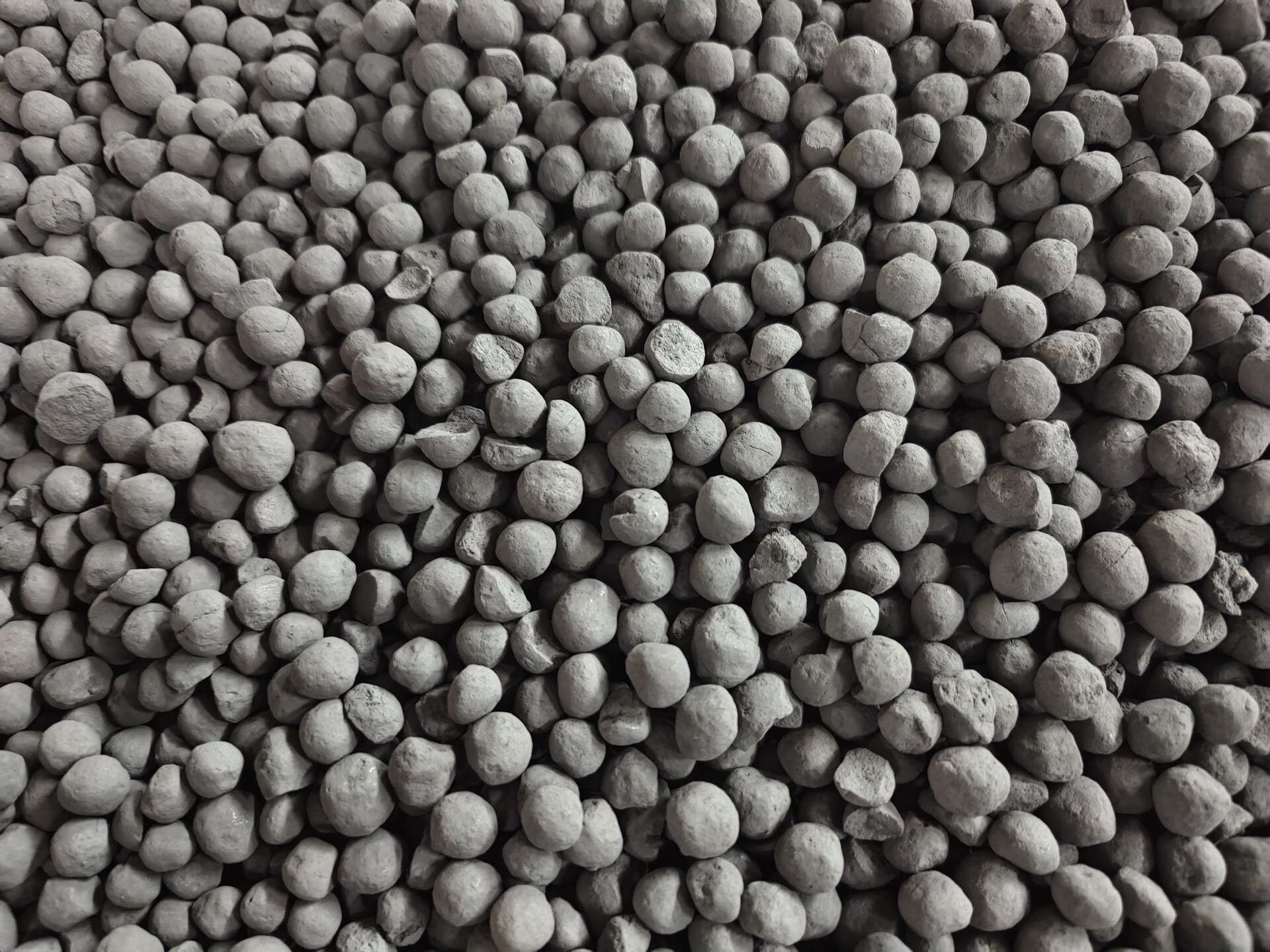
Iron ore pellets are the primary feedstock of incumbent shaft DRI technology and accounted for 95 million tonnes of global DRI production in 20241. While Pilbara iron ores fines have historically been processed in sinter plants, the industry is now using these products in the pellet making process, which then enables use in DRI furnaces. We are working with partners, including Zenith Steel in China, to increase the proportion of BHP’s Pilbara iron ore fines content in pellet blends to enable pellet quality metrics to be suitable for pellet use in shaft DRI plants. Ongoing trials will test BHP ore performance in pellet blends in DRI for use in available electric arc furnaces (EAF) as a blend material, and in pilot ESF plants as the primary feed. Increasing the utilisation of Pilbara iron ore fines will support future DRI deployment and, over time, combined DRI ESF pathways have the potential for significant CO₂ emissions intensity reduction above 80 per cent compared to conventional blast furnace steelmaking.
Together, these initiatives advance our CY2030 goal to support industry to develop steel production technologies capable of a 30 per cent lower GHG emissions intensity relative to conventional blast furnace steelmaking (with widespread adoption expected post-CY2030), while laying the foundations for near zero emissions2 steelmaking in the long term.
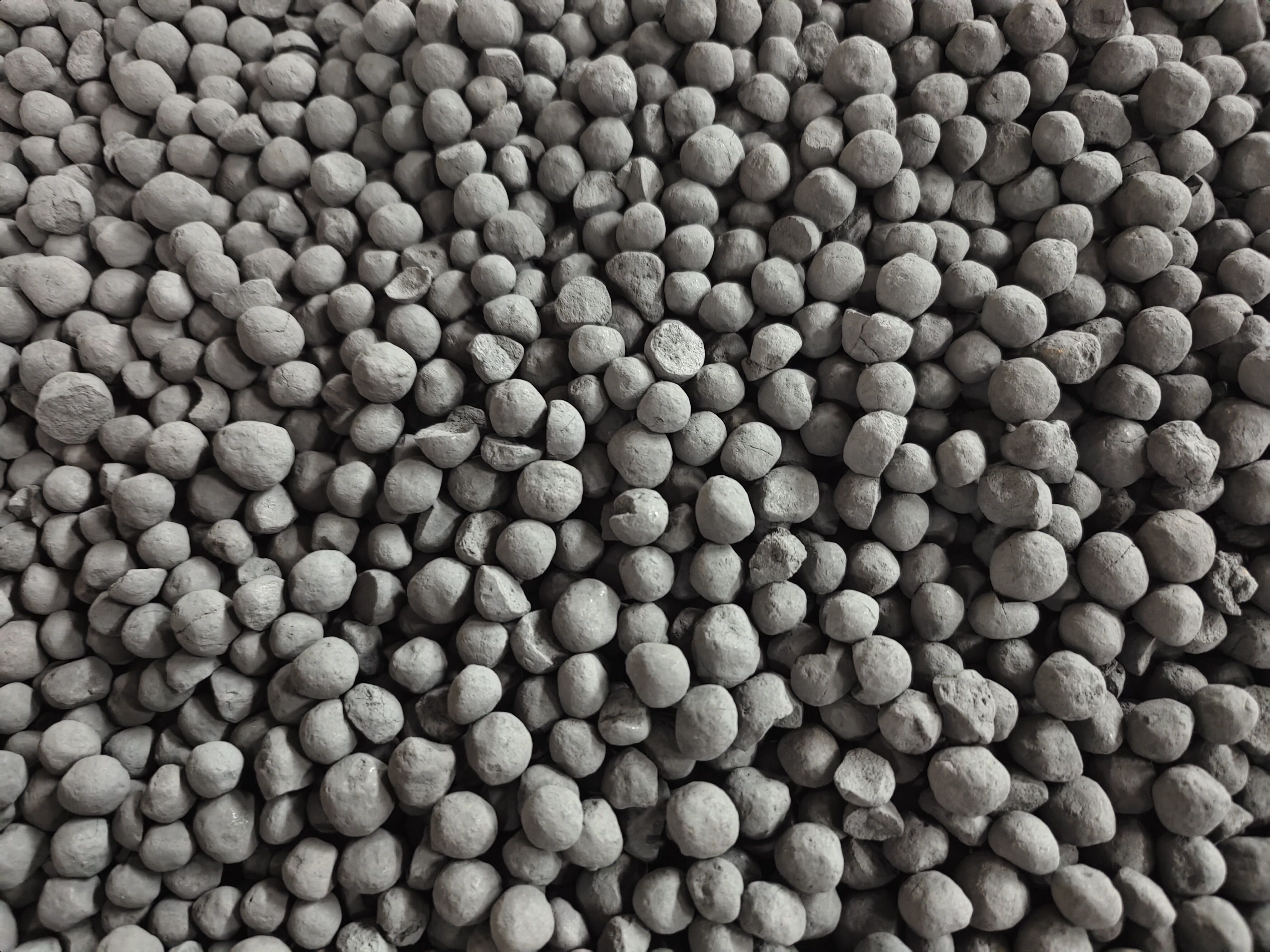
Pellet DRI sample produced with blends of BHP Pilbara iron ore
Footnotes:
1 Midrex CY2024 statistics
2 0.40 tonnes of CO2-e per tonne of crude steel for 100 per cent ore-based production (no scrap), as defined by the International Energy Agency (IEA) and implemented in ResponsibleSteel International Standard V2.0 (‘near zero’ performance level 4 threshold). IEA (2022), Achieving Net Zero Heavy Industry Sectors in G7 Members, IEA, Paris, Licence: CC BY 4.0, which also describes the boundary for the emissions intensity calculation (including in relation to upstream emissions).
Related Content


