




Education for the future is not a future problem
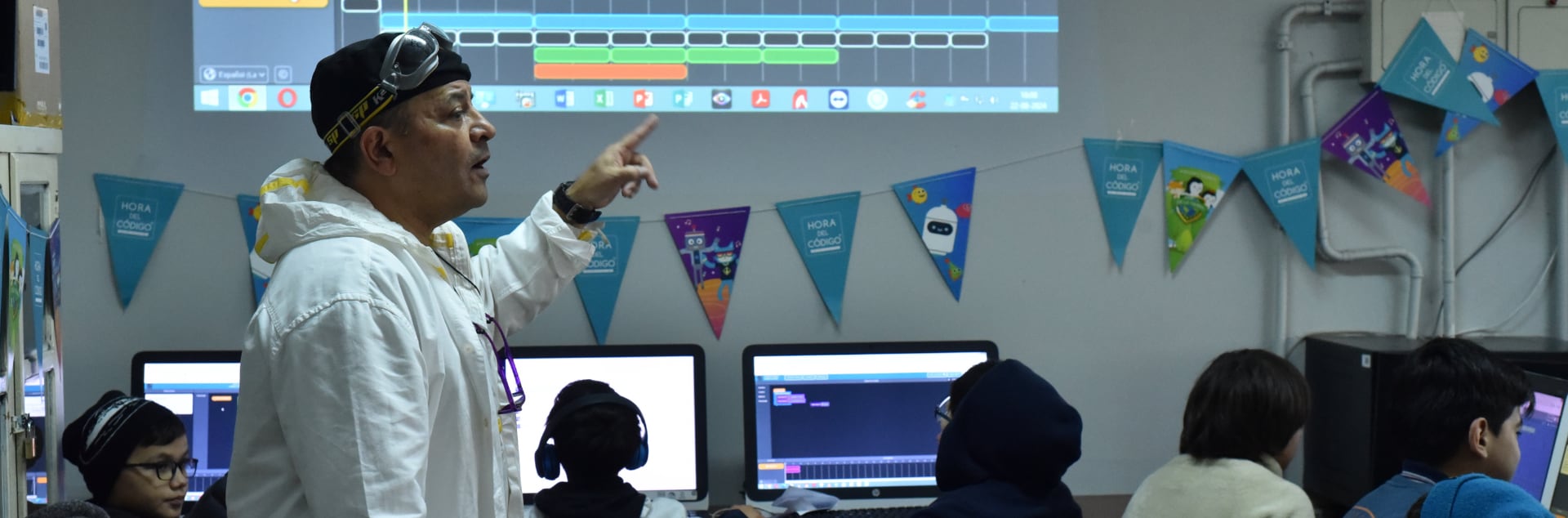
In Latin America, digital literacy policies have predominantly focused on making computers and digital information and communication technology more accessible.1 But to meet the demands of today’s digital transformation, digital literacy alone is no longer enough.
There has recently been a growing recognition of the need to shift technology training to help children and young people understand how technologies work and their underlying principles.
Preparing underrepresented youth for the future economy is key in helping to build a strong, empowered community and a workforce that’s ready for what’s ahead.
Addressing the digital divide
IdeoDigital is a digital education initiative launched in 2021 through a strategic partnership between Fundación Kodea and the BHP Foundation to help close Chile's digital skills gap. Since then, the initiative has expanded its work to strengthen the education system's capacity to integrate digital skills, computer Science and artificial intelligence (AI) into teaching and learning.
The multi-year project has been working to help create the necessary conditions to integrate Computer Science into the national public education system; helping new generations of students grow from digital consumers to digital agents.
The IdeoDigital project looks at sustainable change through a systems lens – working across the education ecosystem to:
- provide training and content for teachers and schools
- advocate for greater awareness of the skills gap in public school systems
- seek to influence public policy to put digital literacy on the agenda and into school curriculums
“Our work with IdeoDigital also aims to raise awareness about the need to build digital citizenship and influence public policies that focus on strengthening 21st-century skills in students, as well as addressing the urgent need to incorporate these topics into training for teachers”, said Alejandra Garcés, BHP Foundation Country Director for Chile.
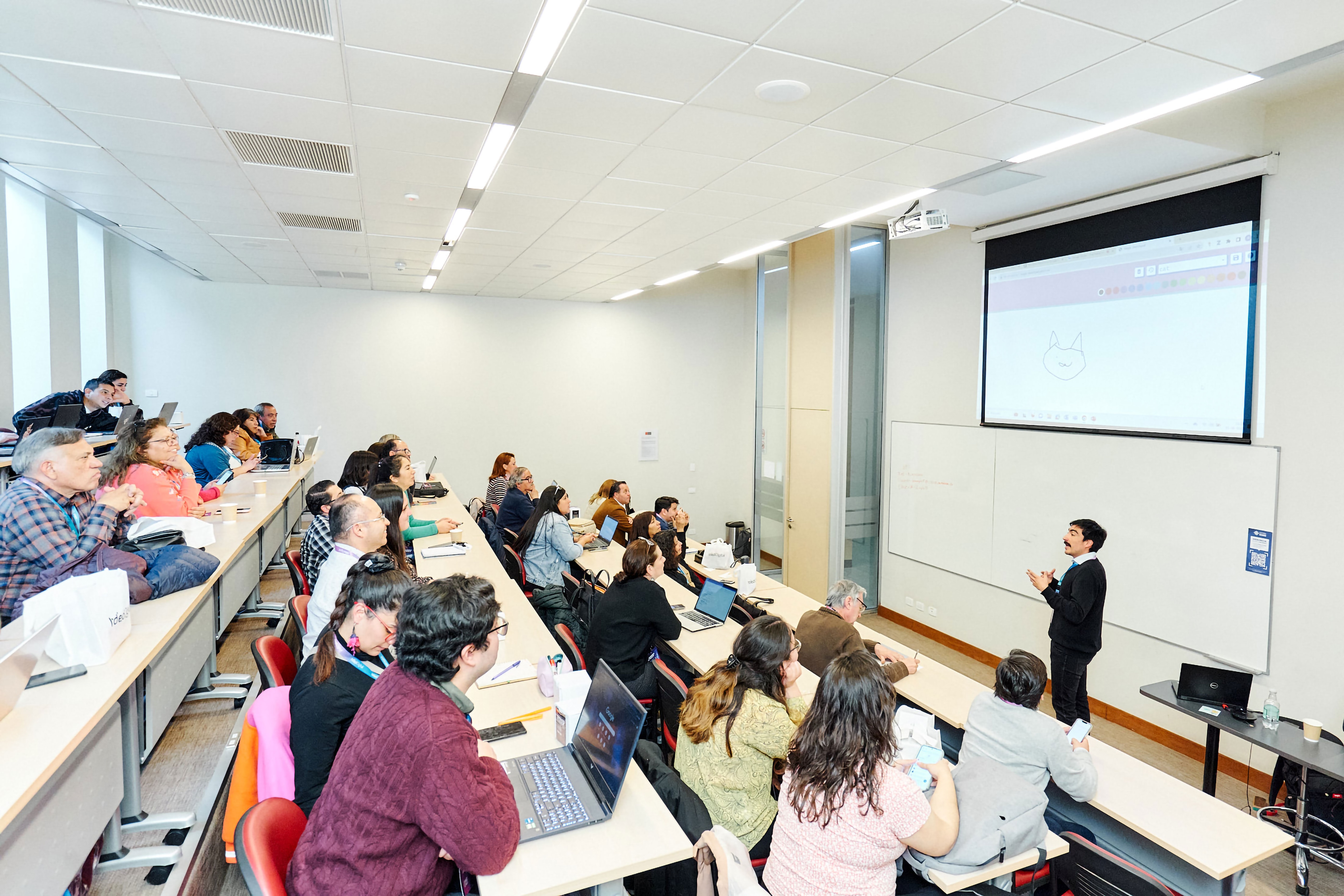
In response to the rapid growth in AI, IdeoDigital incorporated AI into its program and joined the creation of the first AI course for 600 pedagogy students in Chile across four universities in an initiative coordinated by the Ministry of Science, the Metropolitan University of Educational Sciences (UMCE), the National Center for Artificial Intelligence (CENIA), and Fundación Kodea.
Following the successful pilot, the initiative entered a new stage: The Undersecretariat of Higher Education and the Council of Chilean University Rectors (CRUCH) joined as partners, shifting the model toward training university faculty to build AI capacity across teacher education programs nationwide. A total of 46 academics from nine universities are currently participating, representing one-third of the 26 CRUCH universities with teacher education programs. By 2029, the initiative aims to train more than 75 academics, to reach over 3,300 future teachers and indirectly impacting 20 per cent of Chile's school enrollment.
From commitment to results
From 2021 to 2025, IdeoDigital developed, curated, translated and distributed content on technology subjects for students aged six to 18. This was carried out through a strong network of partnerships in the public education system, from the Ministry of Education to local entities.
The project has helped train more than 1,300+ teachers in Computer Science in 14 of the 16 regions in Chile. Teachers are taking their learnings to the classroom, benefitting close to 38,000 students across the country, with more than 250 schools implementing IdeoDigital’s program.
Public and private collaboration is key to the project’s success. Through its collaboration with the Ministry of Education, IdeoDigital's content is available as a public resource for the educational community.
From 2026, IdeoDigital has entered a new national scale-up phase focused on strengthening system-wide capacity by expanding its reach to teachers, school leaders and pre-service teachers. The 2026–2029 stage aims to reach 9,500 direct beneficiaries, with the potential to impact more than 728,000 students across Chile.
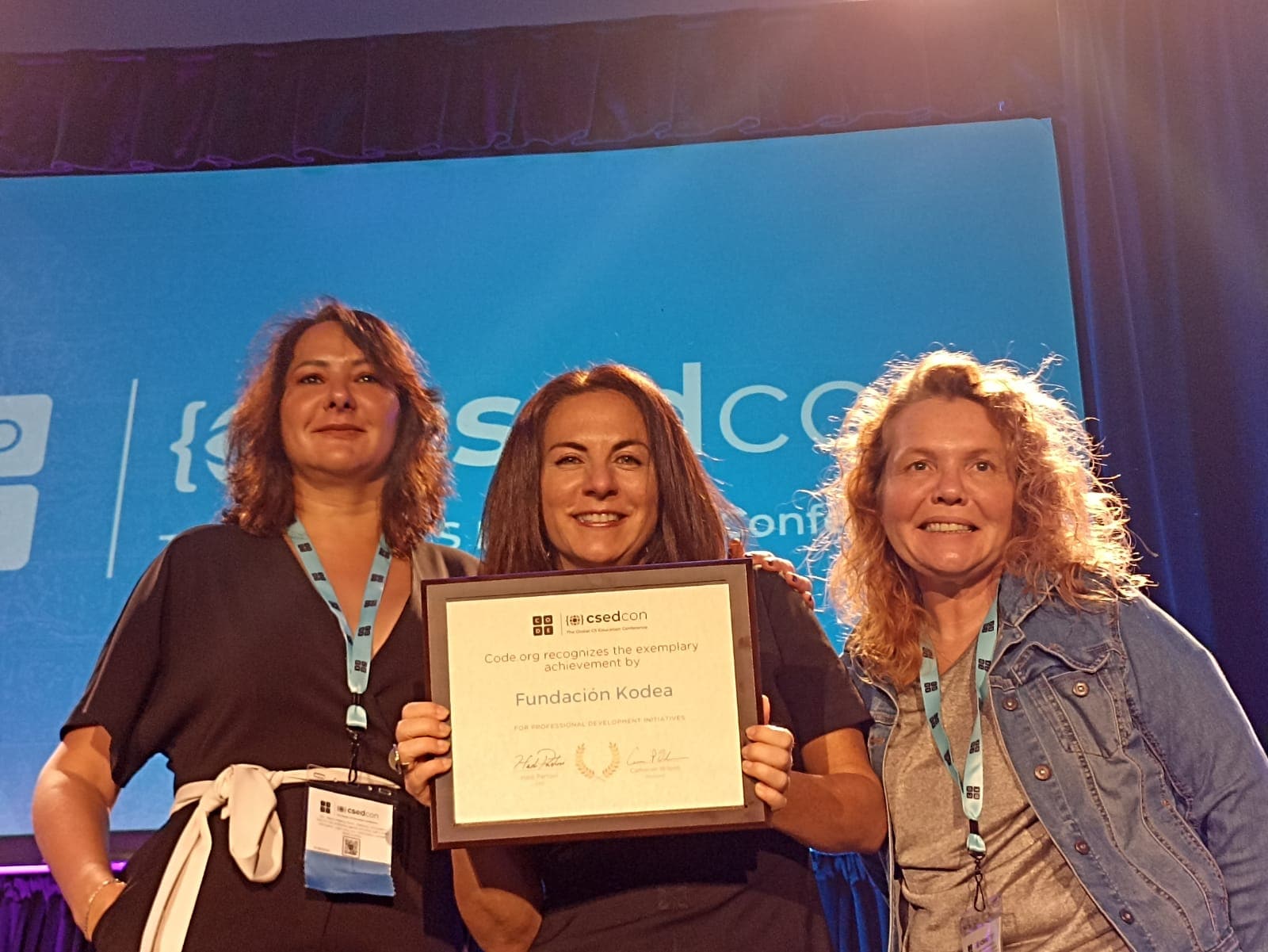
In recognition of this success, IdeoDigital has received accolades on the national and international stage for best practices in digital education.
Potential of an integrated solution
IdeoDigital's integrated model is proving to be an effective approach to help bridge the gaps in STEM knowledge and has potential to achieve greater impact for students in Chile.
The educational resources produced by IdeoDigital in computational thinking and AI were considered during Chile’s national school curriculum update process. These are expected to be implemented nationwide in 2027, applied across both public and private education, giving the initiative the potential to reach more than 3.5 million children and youth.
The project’s success has the potential to offer more than just a positive contribution to Chile’s education system. It is a model that has the potential to be used to help prepare students for the future in other South American countries, with interest already shown from Peruvian schools.
Footnotes:
1. OCDE (2020), Making the Most of Technology for Learning and Training in Latin America, https://doi.org/10.1787/ce2b1a62-en. © 2020 OCDE, París.

Related Content


