




BHP and China Baowu renew steel decarbonisation partnership
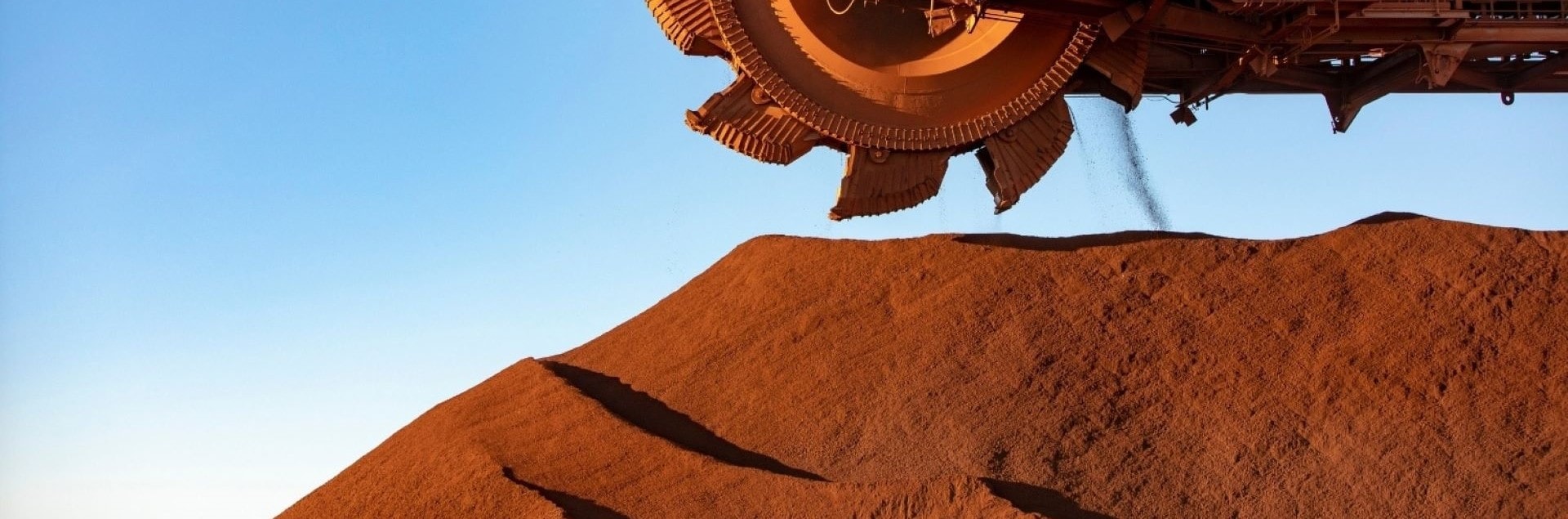
BHP and China Baowu Steel have renewed their steel decarbonisation partnership through a new Memorandum of Understanding (MoU), building on five years of collaboration and multiple joint initiatives since 2020.
The renewed partnership reflects a shared commitment to working across the steel value chain to help solve the challenges of steel decarbonisation as an industry.
Through the renewed five-year MoU, BHP and China Baowu will continue to collaborate on opportunities that support the development of lower emissions steelmaking and advance innovation, technical knowledge and practical decarbonisation pathways for the existing blast furnace operations and high-potential emerging technologies across the steel value chain.
A key area of focus will be to progress modified blast furnace technologies. This will explore using BHP’s Pilbara iron ores to target demonstration of a carbon dioxide emissions intensity at least 30 per cent lower than conventional blast furnace operations and potentially more than 80 per cent when carbon storage and renewable energy are available.
A second priority will continue progress on utilisation of BHP’s Pilbara ores in Direct Reduced Iron (DRI) trials, including subsequent processing in Baowu’s planned demonstration electric smelting furnace (ESF).
Since November 2020, BHP and China Baowu have collaborated across a number of pilots and steelmaking trials to decarbonise the blast furnace and test emerging steel decarbonisation technologies. A highlight has been the trial of using BHP’s Pilbara ores in China Baowu’s 1Mtpa hydrogen-based direct reduced iron furnace. This produced iron with 50 per cent carbon dioxide intensity of blast furnace-based metal and enabled pilot-scale electric smelting furnace tests to demonstrate the near zero emissions1 steelmaking potential from this pathway.
A second collaboration launched in 2024 was the China Baowu – Monash University – BHP Industry Knowledge Centre for Low Carbon Metallurgy. This involved multiple projects across research institutes and universities in China and Australia.
The milestones we have reached are examples of how partnerships can support industry efforts to decarbonise. Collaboration across the value chain is required to support progress towards decarbonisation of the hard-to-abate steel industry. The BHP-China Baowu partnership, which started in 2020, is a great example of what’s required.
BHP is supporting multiple potential technology pathways that are aligned to our customers roadmaps, jointly funding demonstration and abatement projects, collaborating on ways to enable reduced emissions in abatements to the existing blast furnace operations of its customers, while also helping to de-risk new technology pathways that use hydrogen and electricity and our Pilbara iron ore as a key feedstock.
As a world-leading steelmaker, China Baowu plays an active role in identifying and progressing the work required to implement lower emissions technologies to reduce carbon emissions from steelmaking.
1 0.40 tonnes of CO2‑e per tonne of crude steel for 100 per cent ore‑based production (no scrap), as defined by the International Energy Agency (IEA) and implemented in Responsible Steel International Standard V2.0 (‘near zero’ performance level 4 threshold). IEA (2022), Achieving Net Zero Heavy Industry Sectors in G7 Members, IEA, Paris, License: CC BY 4.0, which also describes the boundary for the emission intensity calculation (including in relation to upstream emissions).
Related Content


