




Economic and commodity outlook


Please refer to the Important Notice at the end of this article1
Executive Summary
The outlook for BHP’s key commodities remains strong. Long-term demand continues to be underpinned by population growth, urbanisation, rising living standards and industrialisation, with China a major demand centre and India entering a multi-decade period of infrastructure and industrial expansion. On top of these established foundations, accelerants are emerging that add to demand for our commodities. A massive CapEx swing into digitalisation and growing electrification both require large-scale investments in commodity-intensive infrastructure.
For BHP, the implications are constructive: a more digitalised and electrified world requires more of the commodities we produce. Steel will be needed to build physical infrastructure, while copper will be needed to support electrification and digitalisation. Uranium demand will benefit from power diversification to support energy security, and potash will continue to be vital in increasing crop yields. Investors are increasingly recognising that commodities and diversified miners provide sought-after exposure to durable investment themes and frontier technology. Our diversified portfolio allows us to perform and grow while maintaining strong cash flows across a range of market conditions.
Strong Established Foundations
Population growth, urbanisation and rising living standards remain central to our commodity demand forecasts. China remains at the core of the growth outlook, while demand is increasing from India and other emerging economies as they build out their industrial capacity.
India’s commodity demand has plenty of room to grow as it expands its infrastructure and capital stock from a low base. Steel stock per capita in developed economies, including Japan, Germany and Europe is 11–13 tonnes. China has reached around 10 tonnes, while India sits at only 2 tonnes. Similarly for copper, advanced economies have accumulated close to 200 kilograms per person, compared with only 15 kilograms in India. The physical build-out required to scale the development pathway is already underway. Over the past decade, public CapEx has increased more than 4x, the pace of highway construction has risen to around 34 kilometres per day from about 12 kilometres per day, and the national highway network has expanded by around 50%. These will only grow from here.
Demand Accelerants
On top of these established foundations, new accelerants are emerging that will add to demand for BHP’s key commodities. Significant CapEx flowing into digitalisation and AI and growing electrification portend large-scale investments in commodity-intensive products and infrastructure.
Artificial Intelligence
AI cannot be built without metals. Copper is essential to produce chips, and to build data centres and the electricity infrastructure to run them. We estimate that every additional $200 billion2 of annual data centre investment requires the equivalent of a new 150kpta copper mine to supply the metal for computer hardware and power needs.
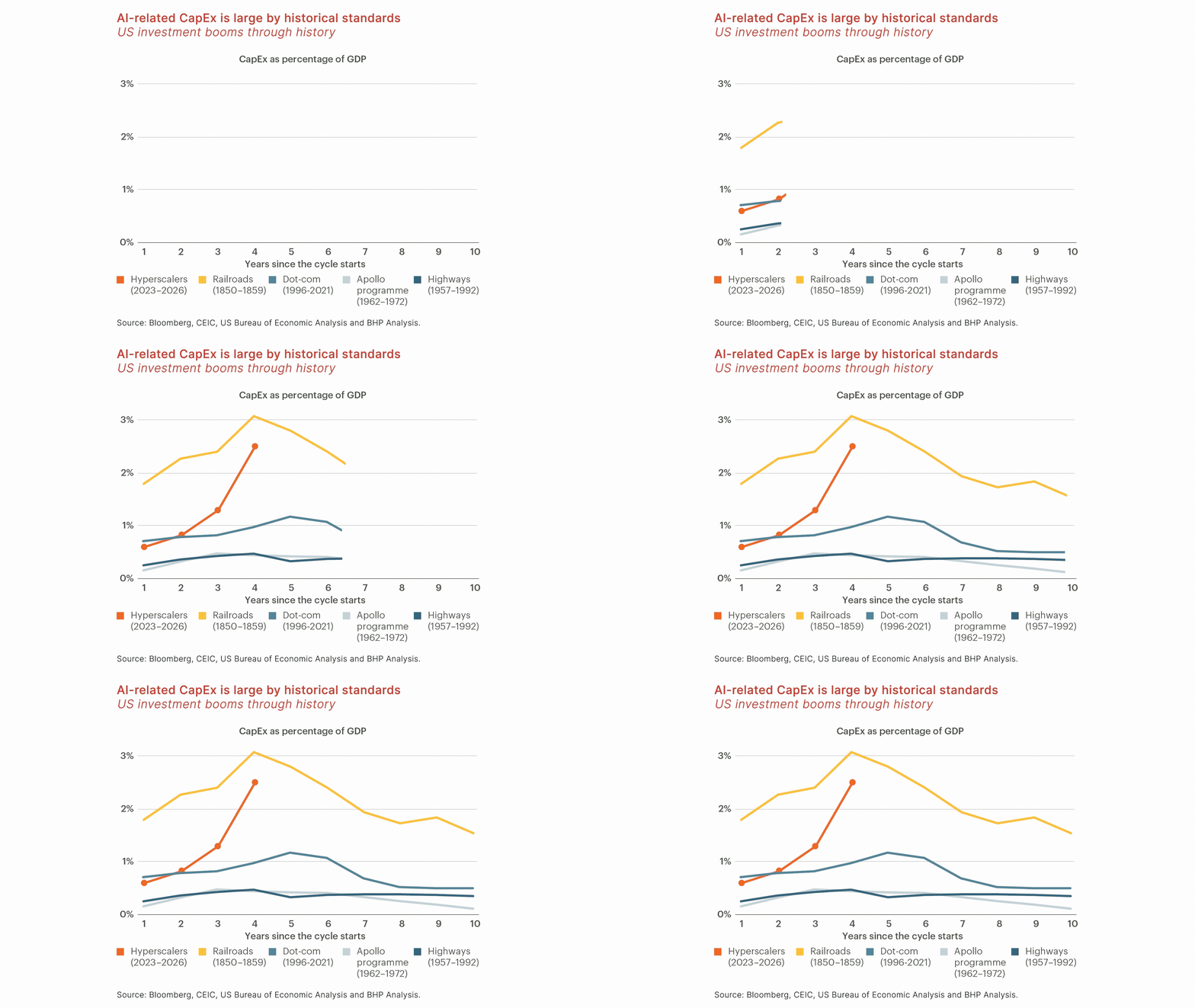
AI-related CapEx is large by historical standards with the largest US hyperscalers expected to spend $700–800 billion in CY2026 (2.4% of GDP). On a peak annual spend basis, it is larger than broadband and telecom investment at the height of the dot-com CapEx cycle, and larger than the landmark Apollo and Interstate Highway System public investment programs. Indeed, it is larger than all three combined. And the global footprint is expanding outside of the United States. South Korea recently announced AI-related investments of around $1 trillion over the next decade. China is also reportedly considering $295 billion of public investment over the next five years (~1.4% of GDP) to expand data centre capacity.
Electrification and Expanding Power Systems
We expect power demand to grow materially over the coming decades, driven by decarbonisation, digitalisation and energy security. Copper will be needed for electrified end-use applications, growing renewables capacity, and grid advancements.
Copper-intensive power systems are essential enablers of data centres. According to the International Energy Agency (IEA), AI data centre power demand surged +50% in CY2025. Overall demand from this segment is projected to double by CY2030, equivalent to adding roughly a Germany-sized power market (around 500TWh) over that period. If our high case is achieved, it would add more than Japan’s annual electricity demand (>1100 TWh).
Copper demand is also being supported by increased electrification of transport, with electric vehicles (EVs) containing roughly 3x more copper than internal combustion engine vehicles. While this trend has long been driven by decarbonisation, efforts to reduce fossil fuel dependence following recent energy crises are providing additional momentum. After stepping back earlier in the year, global EV sales growth rebounded to +5% YoY in March–June, with EV penetration growing to over 1/5 of global vehicle sales.
Sources of power supply will need to diversify to meet this rising demand and to enhance energy security. Copper and steel-intensive renewable energy sources will be central to this, particularly as they become cheaper. Alongside, energy security concerns are reviving interest in biofuels and emerging nuclear technologies such as Small Modular Reactors (SMRs), increasing demand for BHP uranium and potash respectively.
Building out the transmission and distribution systems to get power to its destination will also benefit BHP’s portfolio. According to the IEA, more than 2,500 GW of renewables, storage and large-load power projects (mainly data centres) are waiting for grid connection globally. China has identified power infrastructure as a key enabler in its 15th Five-Year Plan (2026-30) with investment set to grow to RMB 5 trillion over the five-year period, up +80% from the RMB 2.8 trillion spent in the previous five years. For the US, forecasters estimate cumulative grid or utility CapEx to grow by around $550 billion to $1.4 trillion over the next five years.
The upshot is that these accelerants are reinforcing the demand for copper, steel, and uranium.
Commodity Market Outlook
Against this backdrop, investors are increasingly recognising that commodities and diversified miners provide sought-after exposure to durable investment themes and frontier technology.
Copper, for example, is seen by some as an investment vehicle for AI-exposure, attracting a broader class of investor flows including through macro funds, exchange traded funds, and futures contracts. BHP is the world’s largest copper producer3 and well-positioned to benefit from future developments. At the same time, our diversified portfolio also provides cash flow resilience across commodity cycles and long-term investment themes.
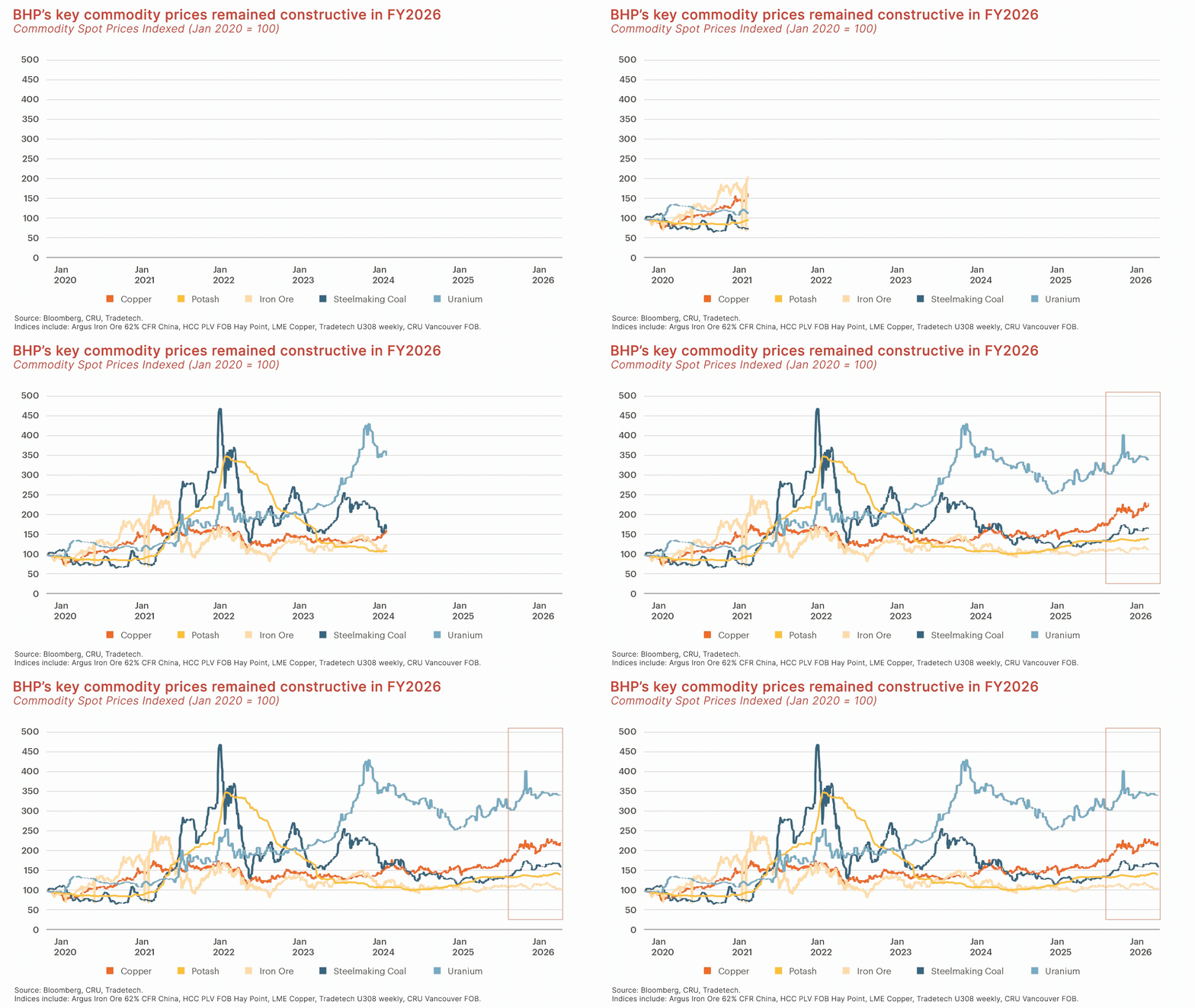
Across BHP’s key commodity portfolio, market conditions have remained constructive. Longer-term structural forces such as AI and electrification have contributed to copper’s strong performance since the start of CY2025. Iron ore prices have also remained resilient, supported by Chinese steel production and marginal cost support. Steelmaking coal prices strengthened from CY2025 levels as strong Indian import demand and supply disruptions tightened an otherwise balanced seaborne market. Potash prices also recovered on Chinese restocking, firm global consumption and annual contract resettlements in China and India.
Copper
We continue to expect global copper demand to grow to over 50 million tonnes by 2050, with non-traditional demand from energy transition and digitalisation to grow at a 6.5% CAGR from 2020 to 2035.
Copper mine supply is struggling to keep pace with expectations of robust demand as many existing mines face ore grade decline and reserve depletion. CRU estimates that over 2.5 million tonnes of uncommitted mine supply (i.e. not yet approved for development) is required by 2030 to keep the market in balance. This gap could widen up to 10 million tonnes in the coming decade.
Despite higher copper prices over the last several years, copper recycling rates and scrap flows are underperforming expectations. Numerous countries are enacting policies to secure access to strategic materials, which is restricting rather than enabling scrap flows.
For example, the EU’s waste shipment regulation will restrict scrap exports to non-OECD countries, while the US has capped exports of high-grade scrap.
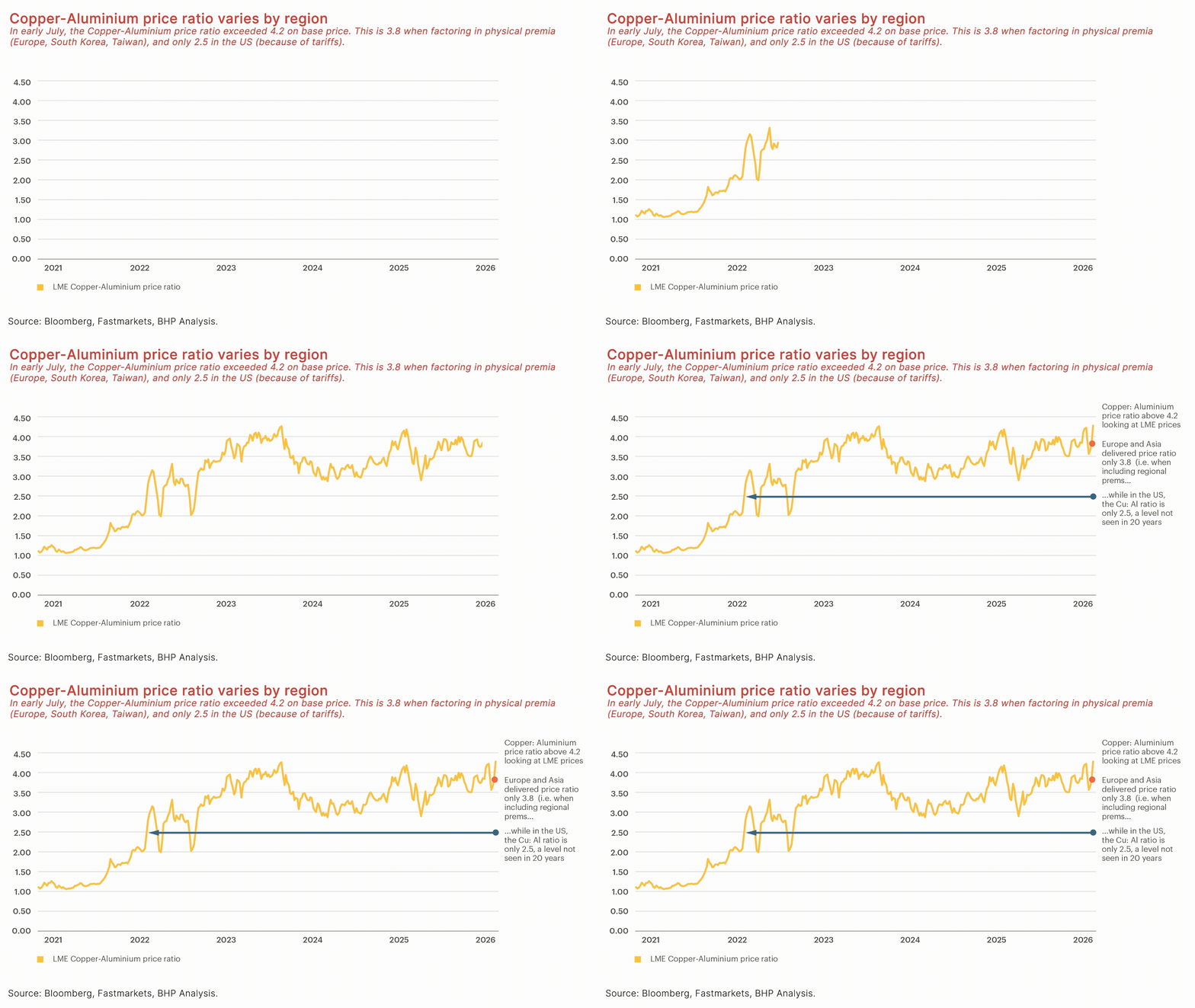
Elevated copper prices have also renewed discussion on substitution and thrifting. Substitution is not a new phenomenon and has been an underlying trend within the copper market for decades. We expect future reductions in copper intensity to be concentrated in newer demand segments such as EVs and renewables where designs continue to evolve. That said, the copper-aluminium price ratio remains relatively low in some regions, particularly in the US once tariffs and physical premiums are included, limiting the economic incentive to switch materials in the near-term. Over the longer term, substitution is also constrained by technical, physical and regulatory considerations, with copper often remaining the preferred material due to its superior electrical conductivity, reliability and space efficiency.
Against the backdrop of these strengthening market fundamentals, we estimate that our pipeline of organic growth options could increase our attributable copper production to about 2 million tonnes per year (~2.5 million tonnes per year copper equivalent) by FY2035, building on our position as the world’s largest copper producer.4
Potash
Global potash demand continues its upward trajectory anchored in the durable drivers of population growth, rising protein consumption and potassium soil depletion.
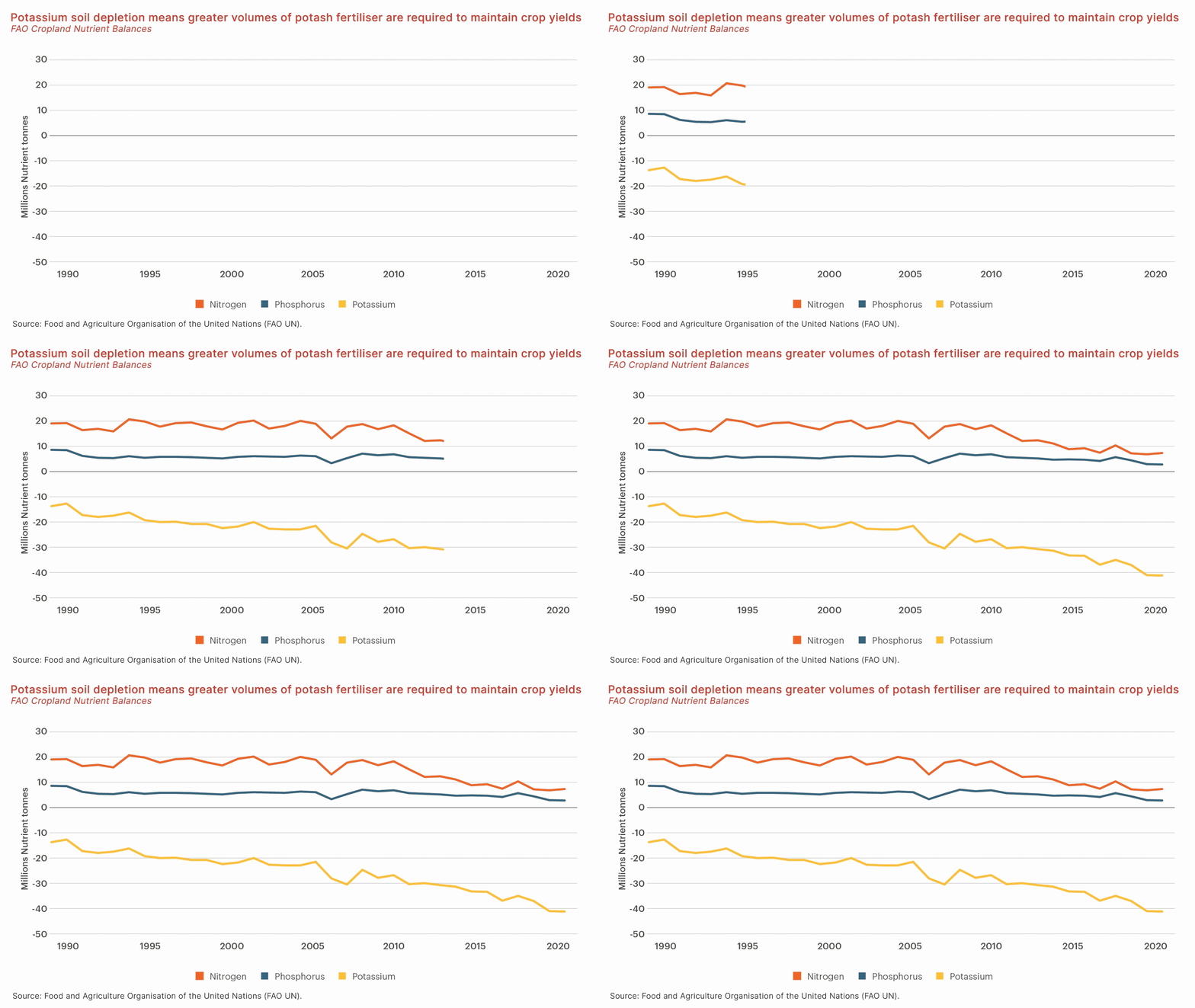
The Food and Agriculture Organisation of the United Nations (FAO UN), the leading global authority on crop and food balances, has reported that structural potassium deficits are emerging in many regions.
Potassium soil depletion means greater volumes of potash fertiliser are required to maintain crop yields. Increasing deficits are not sustainable and a step-change in potash application rates should be expected. We continue to expect potash demand to grow ~70% from the start of the decade, surpassing 100 million tonnes by 2050.
Over the next decade, new potash capacity is expected to come online across Russia, Belarus, Laos and Canada. These projects are needed to meet depletion in existing assets and the growing demand for potash. Longer term, we expect demand to outpace supply growth and prices to rise to incentivise a new round of capacity expansions.
Potash is geared to different end-markets and drivers than other commodities in our portfolio. Consequently, once in production Jansen Stage 1 and subsequently Stage 2 provide BHP with portfolio diversification which may contribute to lower volatility in earnings and cash flow generation.
Steel and Steelmaking Raw Materials
Steel is essential for infrastructure, construction and manufacturing. It will continue to benefit from the traditional commodity demand drivers of population growth, urbanisation, and rising living standards. Steel is also required for decarbonisation infrastructure. We continue to expect demand for steelmaking raw materials to be resilient, supported by blast furnace capacity growth in developing economies.
Despite the ongoing weakness in China’s property market, China’s steel production has remained resilient at around one billion tonnes for seven consecutive years. Going forward, the country’s increasing focus on advanced manufacturing, digitalisation, modern infrastructure and industrial upgrading is expected to support crude steel at roughly this level for the remainder of the decade.
India has expanded its steelmaking capacity to ~220 Mtpa in FY2026, up 10% year-on-year, and is targeting 500 Mtpa by 2047 (~4% CAGR) much of which will be blast furnace based. Southeast Asia is also emerging as a significant growth centre, with around 90 Mtpa of new steelmaking capacity planned by the mid-2030s, around 70% of which is blast furnace based. This growth reflects growing regional demand and efforts to strengthen domestic manufacturing capabilities.
Against this backdrop, we continue to expect demand for steelmaking raw materials to be resilient. In iron ore, India is emerging as a strategically significant participant in the seaborne market.
At its peak in 2009, the country exported 98 Mt iron ore and imported less than 1 Mt. Imports reached 12 Mt in CY2025, more than double the previous year, with industry consultants forecasting this rising to over 80 Mt by 2030. Alongside, scrap utilisation globally has underperformed its long-term growth trend since CY2022, lending support to iron ore demand.
The iron ore market entered CY2026 with a materially stronger cost-support foundation than a year ago. We estimate ~260Mt of supply now requires prices above $80/t CFR to remain economic, up from ~180Mt in CY2025. This reflects sustained inflation in energy and freight costs since the Middle East conflict, as well as new production from emerging African projects and Australian junior miners. For prices to remain materially below $80/t CFR, a significant volume of the 260 Mt of higher-cost supply would need to be displaced likely requiring both weaker steel demand and faster growth in low-cost supply, a combination that appears difficult to sustain over time.
Both iron ore and steelmaking coal supply basins are experiencing resource depletion, with rising capital intensity needed to maintain and replace supply. In iron ore, 90th-percentile costs in Q4 CY2025 were around 40% higher than where they were pre-pandemic on a nominal basis. Traditional supply basins are likely to require more investment to sustain production in the face of grade decline and resource depletion. Wood Mackenzie estimates ~250Mt of operating supply will deplete in the seaborne market over 2026-2035. In steelmaking coal, Australian exports continue to face challenges from geological complexity, operational disruptions and a more restrictive regulatory environment. These dynamics provide higher levels of cost support and also reinforce the strategic value of reliable and high-quality iron ore and steelmaking coal supply.
Uranium
Uranium has benefited from energy security and data centre trends, lifting nuclear’s profile in the global energy mix.
We remain cautious as nuclear power is still challenged by relatively high build costs, complex regulatory bottlenecks, long lead times and community opposition. Nevertheless, higher uranium prices off the back of the market’s improved outlook and increased investor interest continue to support its role as a key by-product at BHP’s Copper South Australia operations.
For a more detailed review of BHP’s economic and commodity outlook: BHP Financial Year 2026 Results.
Footnote
1 Please refer to the Important Notice at the end of this article.
2 Dollar ($) references throughout this article are to United States dollars, unless expressly stated otherwise.
3 BHP’s FY2026 copper production on a consolidated basis relative to CY2025 copper production reported by other major copper producers on a consolidated basis.
4 Represents our current aspiration for BHP group attributable copper production, and not intended to be a projection, forecast or production target. Includes potential increases in production rates, as well as potential production from non-operated joint ventures and exploration programs. The pathway is subject to the completion of technical studies to support Mineral Resource and Ore Reserves estimates, capital allocation, regulatory approvals, market capacity, and, in certain cases, the development of exploration assets, in which factors are uncertain.
Important notice:
This article contains forward–looking statements, which involve risks and uncertainties. Forward-looking statements include all statements, other than statements of historical or present facts, including: statements regarding trends in commodity prices and currency exchange rates; demand for commodities; global market conditions; reserves and resources estimates; recoveries, mine plans, processing performance and other technical assumptions; development and production forecasts; guidance; expectations, plans, strategies and objectives of management; climate scenarios; sustainability, decarbonisation, social value and other targets, goals, pathways and related assumptions; approval of projects and consummation of transactions; closure, divestment, acquisition or integration of certain assets, ventures, operations or facilities (including associated costs or benefits); commodity streaming, offtake, funding or similar arrangements (including associated costs or benefits); anticipated production or construction commencement dates; capital costs and scheduling, ramp-up and project execution; operating costs and availability of materials and skilled employees; anticipated productive lives of projects, mines and facilities; the availability, implementation and adoption of new technologies, including artificial intelligence; provisions and contingent liabilities; and tax, legal and other regulatory developments.
Forward-looking statements may be identified by the use of terminology, including, but not limited to, ‘aim’, ‘ambition’, ‘anticipate’, ‘aspiration’, ‘believe’, ‘commit’, ‘continue’, ‘could’, ‘desire’, ‘ensure’, ‘estimate’, ‘expect’, ‘forecast’, ‘goal’, ‘guidance’, ‘intend’, ‘likely’, ‘may’, ‘milestone’, ‘must’, ‘need’, ‘objective’, ‘outlook’, ‘pathways’, ‘plan’, ‘project’, ‘schedule’, ‘seek’, ‘should’, ‘strategy’, ‘target’, ‘trend’, ‘will’, ‘would’, or similar words. These statements discuss future expectations or performance or provide other forward-looking information.
Forward–looking statements are based on BHP management’s expectations and reflect judgements, assumptions, estimates and other information available, as at the date of this article and/or the date of BHP’s scenario analysis processes. These statements do not represent guarantees or predictions of future financial or operational performance and involve known and unknown risks, uncertainties and other factors, many of which are beyond our control and which may cause actual results to differ materially from those expressed in the statements contained in this article. Investors are strongly cautioned that forward-looking statements are subject to significant uncertainties and may not prove to be correct.
Except as required by applicable regulations or by law, BHP does not undertake to publicly update or review any forward–looking statements, whether as a result of new information or future events.
Additionally, past performance cannot be relied on as a guide to future performance.
No offer of securities
Nothing in this article should be construed as either an offer or a solicitation of an offer to buy or sell BHP securities, in any jurisdiction, or be treated or relied upon as a recommendation or advice by BHP.
Reliance on third party information
The views expressed in this article contain information that has been derived from publicly available sources that have not been independently verified. No representation or warranty is made as to the accuracy, completeness, or reliability of the information. This article should not be relied upon as a recommendation or forecast by BHP.
BHP and its subsidiaries
In this article, the terms ‘BHP’, the ‘Company’, the ‘Group’, ‘BHP Group’, ‘our business’, ‘organisation’, ‘we’, ‘us’, ‘our’ and ‘ourselves’ refer to BHP Group Limited and, except where the context otherwise requires, our subsidiaries. Refer to the ‘Subsidiaries’ note to the Financial Statements in the BHP Annual Report 2026 for a list of our significant subsidiaries. Those terms do not include non–operated assets. Our non-operated assets include Antamina, Samarco, Resolution and Vicuña.
Related Content


