

Jansen potash project
Jansen is helping feed the future, supplying the potash the world needs to support food production for generations to come.
Located in Saskatchewan, Canada, production at Jansen is expected to begin in mid-CY2027. Once fully ramped up, Jansen will become one of the world's largest potash mines, producing approximately 8.5 million tonnes per annum (Mtpa).

Jansen’s large resource endowment provides the opportunity to develop it in stages, with the potential for Jansen to produce 16 to 17 million tonnes of potash a year.
About Jansen
What is potash?
Potash is a potassium-rich salt used mainly as fertilizer. It replaces potassium removed from soil when crops are harvested, helping farmers maintain soil fertility and crop productivity.
Why do crops need potassium?
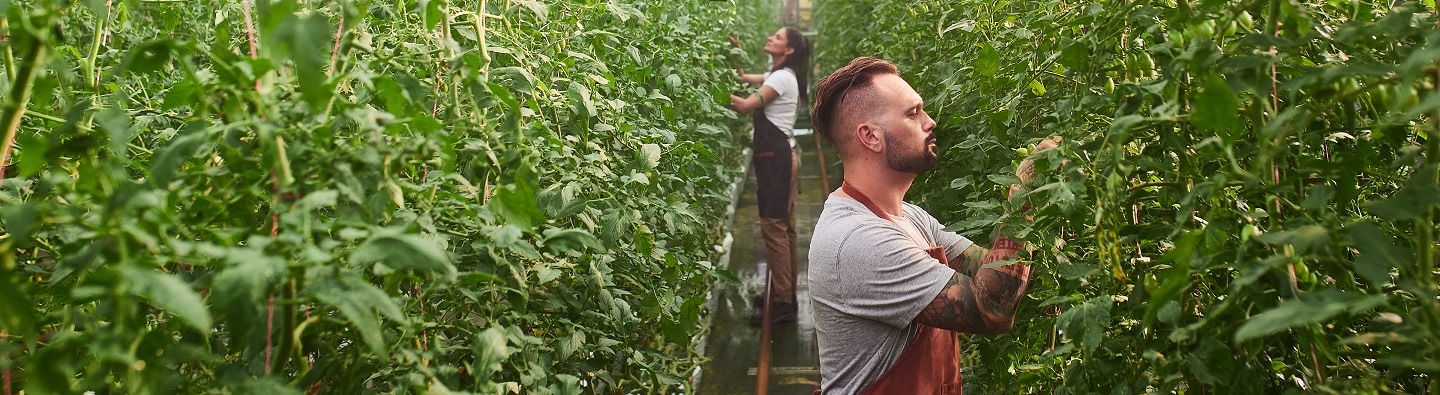
Potassium is one of the three primary nutrients plants need. It contributes to water use, nutrient movement and resilience to environmental stress, and can improve crop yield, quality and resistance to pests and disease.
Is potash the same as potassium?
No. Potassium is a naturally occurring chemical element and an essential plant nutrient. Potash refers to potassium-bearing salts that can be processed into fertilizer.
What type of potash will Jansen produce?
Jansen will produce muriate of potash, or MOP, in red standard and red granular forms. The mine will be able to adjust the production mix in response to customer demand.
How is potash mined at Jansen?
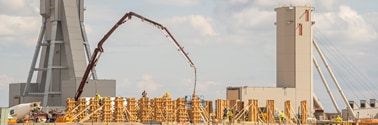
Jansen is a conventional underground mine. Its underground workings are nearly one kilometre below the surface and are reached through two vertical shafts. Potash ore will be mined underground, brought to the surface and processed for transport to customers.
What is the Jansen potash project?
Jansen is a large, long-life potash asset under construction in Saskatchewan, approximately 140 kilometres east of Saskatoon. BHP is developing the mine in stages and expects it to be one of the world’s lowest-cost potash producers.
When will Jansen begin producing potash?
First production from Jansen Stage 1 is expected in mid-2027. Stage 2 – the Jansen expansion - first production is expected in mid-2031, with combined production expected to reach full capacity in financial years 2033 to 2034.
How far along is construction at Jansen?
At 20 October 2026, Stage 1 was 87 per cent complete. Stage 2 was 18 per cent complete. These figures will change as construction advances and should be updated with BHP’s results and project disclosures.
How much is BHP investing in Jansen?
Current investment estimates are US$8.4 billion for Stage 1 and US$6.9 billion for Stage 2, including contingencies. The combined investment is US$15.3 billion, or approximately C$21.8 billion, making Jansen Stages 1 and 2 the largest private mining investment in Saskatchewan’s history.
How much potash will Jansen produce?
Stage 1 is expected to produce 4.15 million tonnes of potash a year. Stage 2 is expected to add 4.36 million tonnes a year. At full capacity, combined production of about 8.5 million tonnes a year is expected to represent approximately 10 per cent of global potash production.
Could Jansen expand beyond Stage 2?
Jansen was designed with options for further development. Subject to future investment decisions and approvals, Stages 3 and 4 could increase production to between 16 million and 17 million tonnes a year.
Where will Jansen potash be sold?
BHP anticipates sales across North and South America, India, Southeast Asia, China and other major potash-consuming regions. The objective is to provide customers with good-quality product and reliable, long-term supply from Canada.
Has BHP reached agreements with potential potash customers?
BHP has memoranda of understanding covering planned production from Jansen Stages 1 and 2. Commercial negotiations are advancing across key regions. Specific terms remain confidential.
What will BHP offer potash customers?
Jansen will add a large, long-life source of supply from a stable Canadian jurisdiction. BHP plans to bring the global marketing experience it has developed in copper, iron ore and steelmaking coal to the potash market, supported by a team with potash and BHP Marketing experience.
How will Jansen potash reach customers?
BHP has agreements with CN and CPKC to move potash from Jansen to Westshore Terminals in Delta, British Columbia. Both railways will run unit trains using BHP rail cars. The Jansen Access Spur connects the mine to both mainline networks, providing two routes to port.
How many jobs will Jansen create?
Construction across both stages is expected to create approximately 5,500 workforce opportunities. Once operational, Jansen will employ about 900 people, with approximately 65 per cent of permanent roles based at the mine site.
What is the BHP Potash Academy?
The BHP Potash Academy is an eight-month paid traineeship delivered with Carlton Trail College in Humboldt. BHP has invested C$6 million in the program. Graduates who successfully complete the training move into permanent roles at Jansen. Across the first two cohorts, 70 per cent of trainees were women and 54 per cent were Indigenous. The third cohort began training in September 2026 and will complete training in April 2027.
How is BHP working with First Nations around Jansen?
BHP has Opportunities Agreements with Kawacatoose, Daystar, Muskowekwan, Fishing Lake and George Gordon First Nations, and Beardy’s and Okemasis’ Cree Nation. The agreements cover employment, procurement, environmental management, and community development. Since Stage 1 was sanctioned in August 2021, more than C$1 billion in contracts have been awarded to majority-owned Indigenous businesses.
How is BHP investing in communities near Jansen?
BHP has provided more than C$61 million in community investment in Canada since 2016, including nearly C$6 million in financial year 2026. Recent investments include over C$1 million towards the development of three new childcare centres in LeRoy, Muenster and Lanigan, C$1 million for a housing program to stimulate new home construction in the Jansen region, and more than C$980,000 in scholarships for over 300 local students.
How is sustainability being considered at Jansen?
Jansen is being built with modern technology incorporated into the mine design. About 80 per cent of the planned underground mining and support fleet is battery electric, and automation will improve safety. BHP is also focused on efficient energy and water use and on maintaining a low-cost operation that can remain resilient through commodity cycles.

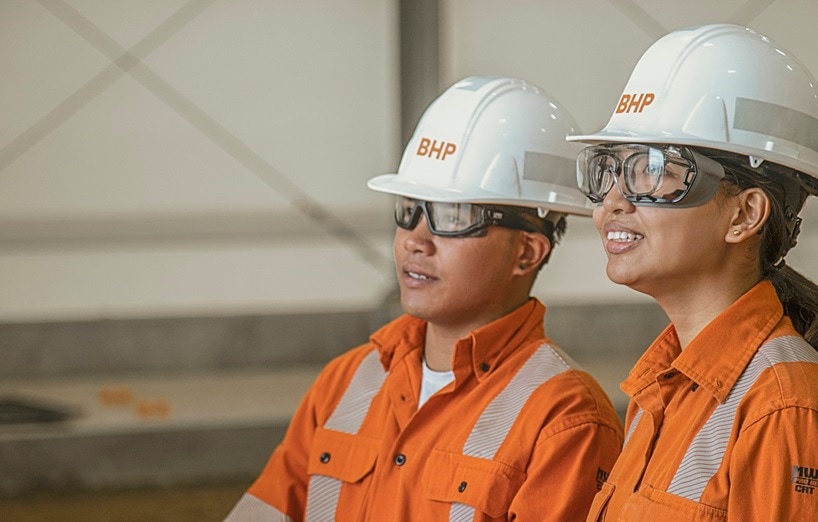
Careers at Jansen
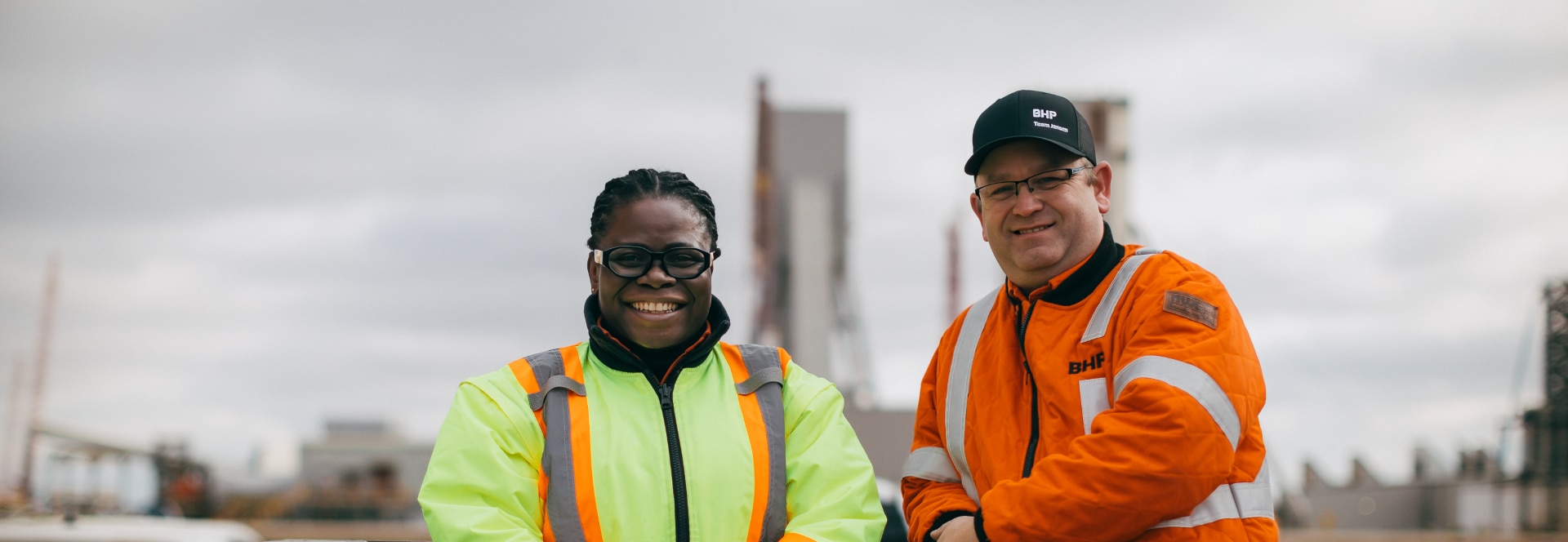
We are building an operational workforce that reflects the communities we’re part of. This includes maintaining a gender balanced2 workforce and achieving our target of 20 per cent Indigenous employee participation at Jansen by FY2026.
Visit our careers website to explore career opportunities with Potash in Canada.
Jansen creates business opportunities for local and Indigenous companies, as well as jobs for the province. Diversity and inclusion are central to building the project’s workforce, which will be approximately 5,500 workers during project construction.
You can see a list of our contract partners here
With respect and gratitude, we operate in Treaty 4, 6, 19 territory and on the traditional, ancestral, and unceded territories of Coast Salish peoples and the homeland of the Métis.
Footnotes:
1 Compared to the average potash mine in Saskatchewan.
2 We define gender balance as a minimum 40 per cent women and 40 per cent men in line with the definitions used by entities such as the International Labour Organization.