




Health

We recognise activities at our operated assets can impact the health of our people and the communities where we operate.

Our ambition
We are committed to identifying health hazards and managing health risks so far as reasonably practicable. To do so, we are focusing our efforts on sustaining our health risk reduction achievements to date by continuing to apply our Risk Framework to consistently manage these risks across the business, while identifying opportunities for continuous improvement. While managing these risks, we also focus on health and wellbeing promotion to enhance our culture of care and an environment where people can thrive.
Our approach and position
Minimum mandatory requirements to manage and protect the health and wellbeing of our employees and contractors are set out in the Health and Hygiene Global Standard and our Risk Framework, as well as local regulatory requirements, standards and procedures.
For information on the role of the BHP Board in overseeing our approach to and delivery on sustainability refer to the Sustainability approach webpage.
Health hazards identified in our workplaces include exposure to musculoskeletal stressors, noise, coal mine dust, respirable crystalline silica, diesel particulate matter (DPM) and psychosocial hazards. We manage exposures to harmful substances, including with internally specified occupational exposure limits (OELs).
For our occupational exposures, our process to set OELs involves periodic monitoring and evaluation of scientific literature, benchmarking against peers and engagement with regulators and OEL-setting agencies. Our approach to monitoring and reviewing our internal OELs is designed to ensure they continue to be aligned with or are stricter than applicable regulated health limits. We implement a range of exposure reduction activities designed to reduce potential exposures to harmful substances to as low as reasonably practicable.
We conduct periodic health surveillance, where required, to help identify potential work-related health effects at an early stage. Our medical surveillance programs are implemented in accordance with applicable regulatory requirements and evidence-based industry practices.
The effectiveness of our exposure controls is regularly reviewed and subject to a periodic audit to provide assurance that controls are implemented and functioning as intended.
Our Health and Hygiene Global Standard is informed by internationally recognised practices and includes requirements to identify occupational exposures that may present a health risk, assess the level of risk and implement exposure control measures. Where exposures cannot be immediately reduced to acceptable levels, additional measures such as personal protective equipment (PPE) may be applied.
In line with Our Charter and our culture of care, we undertake activities to enhance the physical and mental wellbeing of our employees and contractors. This includes the provision of preventative health measures appropriate for the location, such as vaccinations, gym facilities, onsite physiotherapy, healthy food alternatives at our worker village accommodation, and a range of mental health resources, including our Employee Assistance Program (EAP) and peer support programs.
A range of targeted health programs, such as sleep and heat management are made available at many of our operated assets. Workers at remote sites are provided with emergency medical care and primary health care through onsite medical facilities, with telehealth consultations available. These services are provided by qualified individuals, including paramedics, occupational health nurses and medical practitioners, as appropriate, depending on the location. In most of our remote operations, these services are accessible during and after working hours.
The EAP offers a broad range of holistic support services, including nutritional and career counselling. The EAP also provides specialist helplines, such as for domestic violence, Indigenous employee support and LGBT+ hotlines.
BHP offers support for employees affected by family and domestic violence. BHP’s Family and Domestic Violence Support Policy aims to provide employees with support for their health, safety, wellbeing and independence if they are experiencing family and domestic violence.
We continue to monitor emerging health issues and trends through our membership of industry and professional associations, informal benchmarking, industry collaboration, networking and participation in national and international conferences. We also monitor information from scientific journals and occupational health regulatory setting and advisory agencies.
BHP continues to embed psychosocial risk management into everyday work to protect our people and support safe, reliable and sustainable performance. We recognise that both physical and psychological health are essential to our success and are committed to creating safe, inclusive and respectful workplaces where wellbeing is supported and psychosocial hazards are proactively identified and managed.
Psychosocial hazards are work-related factors arising from the design, organisation and management of work, workplace interactions and behaviours, and the work environment. When not effectively managed, these hazards have the potential to contribute to psychological or physical injury and illness. Consistent with our approach to managing all health and safety risks, psychosocial risks are managed through BHP’s Risk Framework and Health and Hygiene Global Standard, with a focus on identifying hazards, assessing risk, implementing effective controls and monitoring their effectiveness over time.
As part of our commitment to continuously improve the prevention and management of psychosocial risk, BHP has implemented an enterprise-wide psychosocial risk management control framework supported by practical tools, guidance materials and capability-building initiatives. The framework establishes a consistent approach across BHP and includes three global critical controls: Respectful behaviours, Person-centred response and support, and Contractor mobilisation. BHP has also identified psychosocial hazard domains and common psychosocial hazards that have the potential to cause psychological or physical injury or illness in the workplace, as outlined in the BHP ESG Standards and Data Book 2026.
While the enterprise framework provides common expectations and critical controls, psychosocial hazards are managed as locally owned risks within assets and global functions. Risk assessments consider each operation’s specific risk profile, with critical and non-critical controls selected, implemented and monitored to address local psychosocial hazards and support effective risk reduction. This approach enables a consistent enterprise framework while recognising that psychosocial risk exposures and control requirements may differ across operational and functional environments.
The framework takes a prevention-focused approach, emphasising the early identification of psychosocial hazards, elimination where reasonably practicable and implementation of controls that address underlying causes. Assurance activities, risk reviews and ongoing monitoring provide insights into control effectiveness and identify opportunities to strengthen psychosocial risk management across assets and global functions over time.
Implementation of the framework is supported through global governance, leadership accountability, workforce consultation and opportunities for shared learning across the business. Our Global Psychosocial Community of Practice helps build capability, promote consistency and share leading practices and lessons learned across assets and global functions.
Information on our performance in occupational exposure management and occupational illness reduction is available in the BHP ESG Standards and Databook 2026 and the BHP Annual Report 2026.
Case studies

One Health – An online tool for managing health surveillance programs
At BHP, health surveillance is used to monitor the health of workers who may be exposed to a specific workplace hazard.
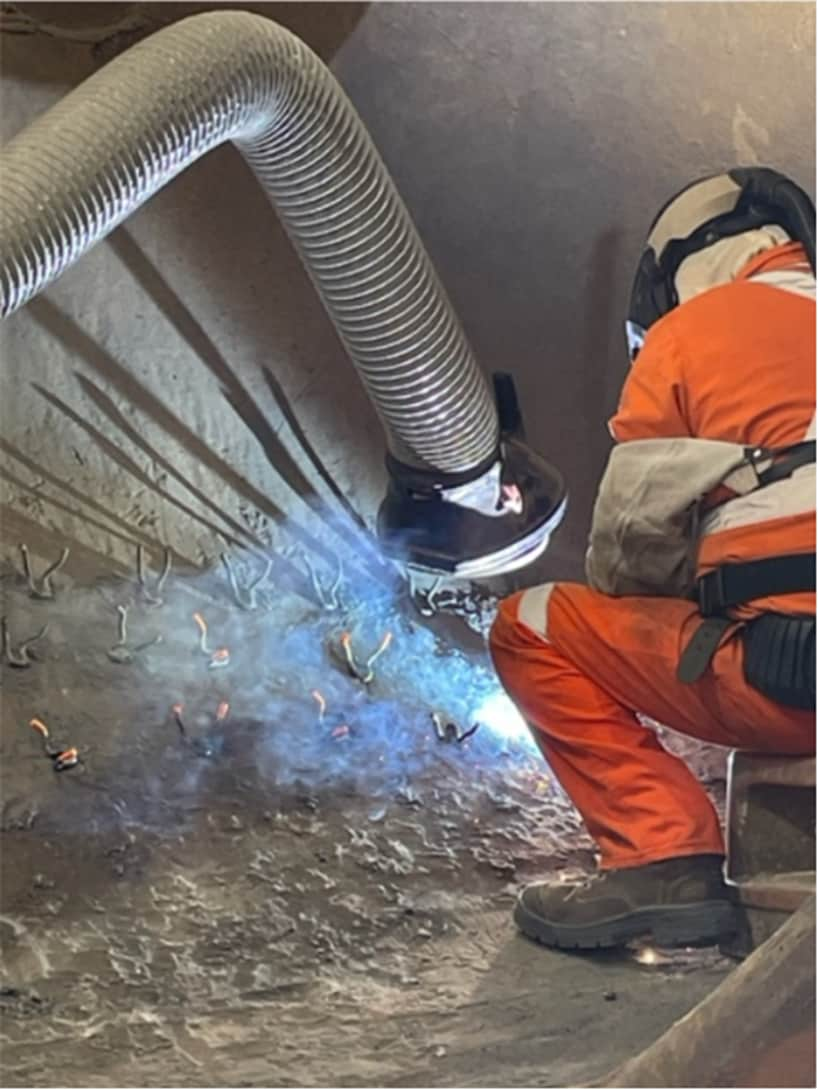
Reducing welding fume exposure at Olympic Dam
Our Smelter Maintenance team began collaborating with our Occupational Hygiene team in 2021 to implement improved controls with the aim of achieving significant welding fume exposure reductions.
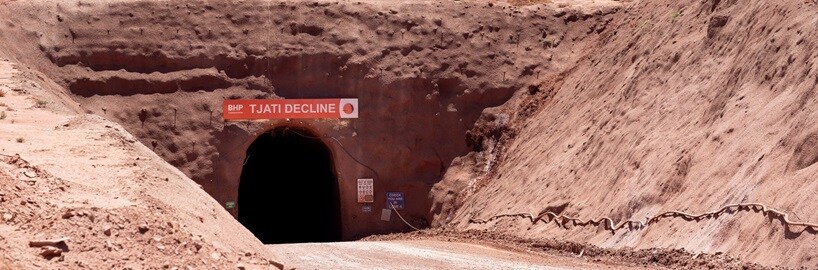
Cool Cabs support improved underground working conditions at Carrapateena
At BHP, we proactively manage health and safety risks by improving working conditions and applying practical, innovative controls where they matter most.
Sustainability case studies, organisational boundary, definitions and disclaimers, and downloads
-
BHP Annual Report 2026pdf

-
Sustainability reporting organisational boundary, definitions and disclaimerspdf
-
Límite organizativo de los informes de sostenibilidad, definiciones y descargos de responsabilidadpdf
-
BHP ESG Standards and Databook 2026xlsx
-
BHP Group Modern Slavery Statement 2026pdf
-
BHP Annual Report 2026, Sustainability Report 7.6 Methodology for calculating Scopes 1, 2 and 3 GHG emissions

-
BHP Climate Transition Action Plan 2024, subject to updates of certain aspects of our assumptions and plans in the BHP Annual Report 2025, Operating and Financial Review 9.8, and BHP Annual Report 2026, Operating and Financial Review 9.10 and Sustainability Reportpdf
-
Global Industry Standard on Tailings Management – Public Disclosure 2026pdf
-
Tailings Storage Facility Policy Statement 2026pdf
-
Case studies